
Exclusive Leads vs Shared Leads: One of These Makes You Money
Lead Generation, Sales Operations
Exclusive Leads vs Shared Leads: One of These Makes You Money
You already paid for the leads. The only question is whether you want to own them or fight over them with three to five competitors who all bought the same record.
If you buy from lead brokers or aggregators today — in legal, home services, solar, real estate, insurance, or anything similar — you live this every week. A “hot” lead hits your CRM, your reps scramble to call first, and you later find out the prospect already talked to two other companies before you even dialed.
This is the core difference between shared leads and exclusive leads. Shared leads are sold to multiple buyers at once. Exclusive leads are yours alone. On paper, shared looks cheaper. In reality, the math almost always tilts toward exclusive — especially when those exclusive leads come from your own website traffic.
Below, we will walk through the numbers in plain language. You will see how a $50 shared lead can quietly turn into a four-figure cost-per-acquisition, while exclusive, identified leads from your own traffic close faster and cheaper — without a broker in the middle.
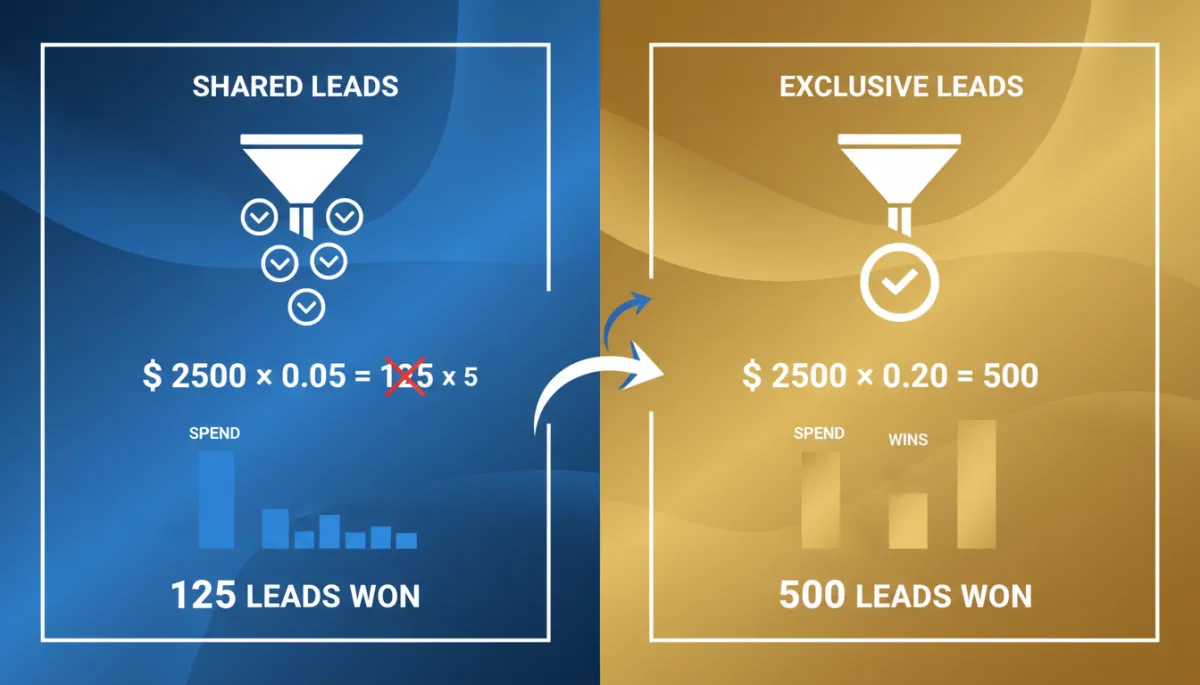
Shared vs Exclusive in One Simple Math Problem
Start with a simple scenario. You pay a broker $50 per shared lead. That same lead is sold to five companies at the same price. The market just spent $250 total to chase one person.
- Your cost per record: $50.
- Total cost poured into that one prospect: $250.
Now layer in close rates. Shared leads are a race. Only one of those five companies can win. Even if you are good and close 10% of your shared leads over time, you are closing 1 out of 10 records you buy. That means your effective cost-per-acquisition on shared leads is:
- $50 per lead × 10 leads to get 1 customer = $500 CPA (before rep time and fees).
Now compare that to an exclusive identified lead from your own site. You are not sharing that person with anyone. If you pay, for example, $20 per identified visitor and close even 15%–18%, your math looks more like:
- $20 per lead × ~6–7 leads to get 1 customer = roughly $120–$140 CPA.
What a Shared Lead Really Is (Not the Marketing Version)
When a broker sells you a shared lead, you are not buying a clean opportunity. You are buying a ticket to an auction. The prospect filled out a form on a comparison site or marketplace. That form is then sold to three to five businesses at the same time — sometimes more, depending on the fine print.
The prospect expects multiple calls. They are actively shopping, which is good. But the game you are now in rewards whoever calls first, not who delivers the best service, best fit, or best result. If you are second, third, or fourth to reach them, you are already behind.
“Shared leads are not leads; they are auctions where your reps are the bidders.”
The First-Mover Problem: Why Shared Close Rates Stay Low
Industry studies on internet leads show the same pattern again and again. The first company to respond to a shared lead wins a huge share of the deals. The second company gets a much smaller slice. By the time you are the third or fourth caller, your odds are tiny.
At the same time, average response times to online leads are measured in hours, not minutes. Many teams take a day or two to follow up. By then, the prospect has already held the conversation, received quotes, and often made a decision. This is why shared lead close rates tend to sit in the low single digits for many businesses.
Three to five competitors. One decision. If you are not first, you are usually donating your rep’s time to someone else’s customer.
The Real CPA of Shared Leads in Common Verticals
Let’s look at a few examples using ranges from public and internal data. The exact numbers vary by market, but the pattern is consistent: once you factor in close rate, shared leads get expensive fast.
- Home services (via Angi): Shared cost-per-lead (CPL) often runs $15–$85, sold to 3–5 contractors at once. With close rates in the low single digits, real CPA can easily land in the hundreds to low thousands per customer.
- Solar: Shared leads at $150–$300 per record, again sold to multiple installers. Close rates are better than some verticals, but deals are large and competitive, so it is common to see effective CPAs in the thousands once you account for lost bids and rep time.
- Personal injury law: Shared leads often cost $200–$500 per record and are sold to three or more firms. Given low win rates and long cycles, it is not unusual for effective CPA to climb into the five-figure range for a single signed case.
In every case, the pattern is the same. The sticker price on the shared lead looks manageable. The true cost-per-acquisition — after low close rates, rep time, and broker fees — does not.
Why “Exclusive” Broker Leads Still Keep You Dependent
Some brokers offer exclusive leads. On the surface, that sounds like the best of both worlds: you pay more, but the lead is only sold to you. These usually do convert better than shared leads, and your reps are not in a five-way cage match for one deal.
The problem is the business model. Exclusive broker leads often cost 3–5× more than shared leads. The broker still owns the channel and the relationship. You are renting demand from someone else’s marketing machine, which means your growth and margins depend on a partner you do not control.
- Higher CPL than shared leads.
- Broker, not you, is the first brand the prospect interacts with.
- You stay exposed to price changes, policy changes, and volume swings you cannot control.
Exclusive Identified Leads From Your Own Traffic
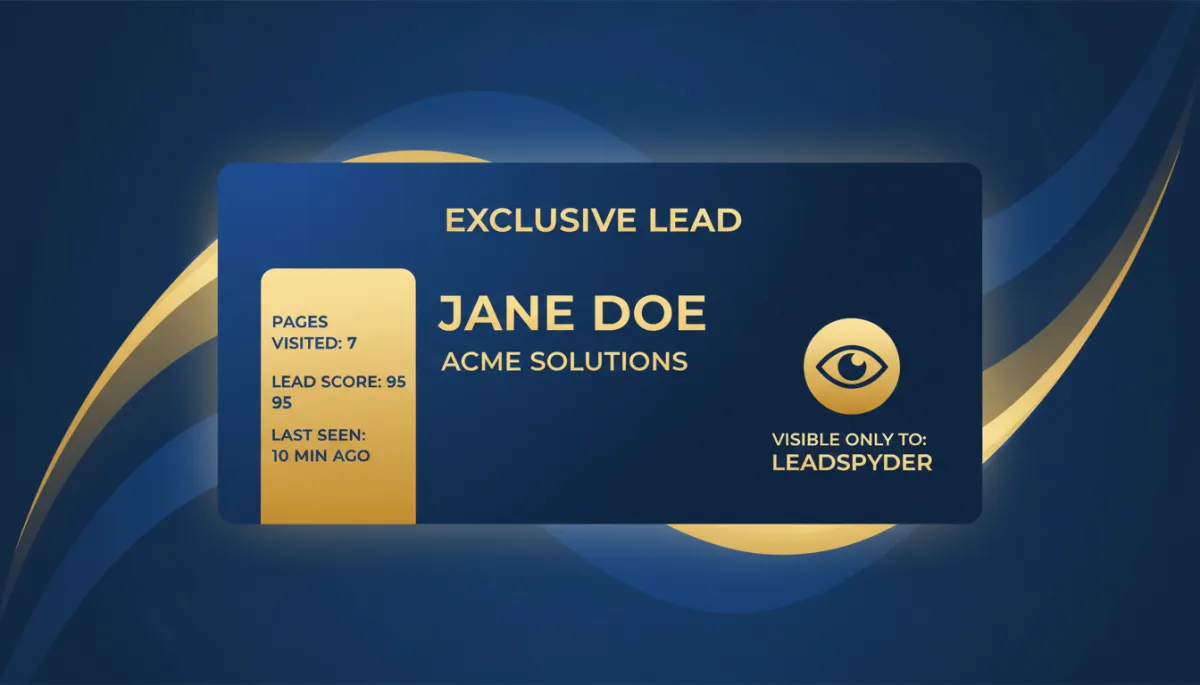
Visitor identification flips the script. Instead of renting leads from someone else’s website, you identify the people already visiting your website and turn them into exclusive, owned leads — with names, contact details, and buying signals.
With LeadSpyder, those identified contacts typically cost in the $8–$25 range per verified person, depending on volume and traffic. There is no competition on that record. No other business gets that contact from your traffic. Your reps call when intent is highest because the prospect was just on your pricing, services, or contact pages.
The Hidden Cost of “Easy” Shared Leads
Shared leads feel easy. You swipe a card, leads show up. The hidden cost is everything that happens after the invoice. Your reps dial, leave voicemails, chase people who already talked to competitors, and re-explain the same pitch over and over for a 2–10% close rate.
Add up the time. If a rep makes 10 calls to reach one shared lead and each call takes 15 minutes, that is 150 minutes of rep time per actual conversation — before the real sales process even starts. Multiply that across a month, and the “cheap” leads are burning your most expensive resource: your team’s attention.
Frequently Asked Questions
What is the difference between exclusive leads and shared leads?
A shared lead is sold to multiple buyers at the same time, usually three to five companies. Everyone calls the same person and competes to be first. An exclusive lead is sold to one buyer only. When that lead is generated from your own traffic, you are the only brand in the conversation from the start.
Why do shared leads usually have lower close rates?
Shared leads are a speed contest. The prospect is being contacted by multiple companies at once, often within minutes of each other. The first company to respond wins a large share of the deals. Everyone else is calling into a decision that has already started or already been made, which pulls close rates down into the single digits for many teams.
How does visitor identification compare to exclusive broker leads?
Visitor identification creates exclusive leads by default because the person was on your site, looking at your offer, with no broker in the middle. Cost-per-identified contact typically runs in the $8–$25 range, and close rates are higher because the contact has already shown intent on your pages. You control the channel, the relationship, and the economics.
Does this work for my industry?
If you buy leads today — in legal, home services, real estate, solar, insurance, B2B services, or similar — you almost certainly have valuable traffic already hitting your website. LeadSpyder turns more of that traffic into named, reachable prospects your reps can call, email, or text directly, without sharing them with competitors.
Your traffic already has names on it. You just can't see them yet.
[Start Free 7-Day Hunt] — https://leadspyder.ai/start
No contract. 30-day money-back. Live in under 10 minutes.