You're Paying for Google Ads Traffic You Can't See. Here's the Fix.
Google Ads, Lead Generation, Visitor Identification
You're Paying for Google Ads Traffic You Can't See. Here's the Fix.
You already paid for the leads. That is the painful part. The clicks are real, the invoices are real, but most of the people who hit your site from Google Ads never show up in your CRM — and never hear from your team.
This is not “just how it works.” In this post, we will walk through the simple math behind your disappearing ad budget, why “good traffic, bad cost-per-conversion” is not bad luck, and how Google Ads visitor identification turns invisible clicks into real, contactable leads your team can actually call.
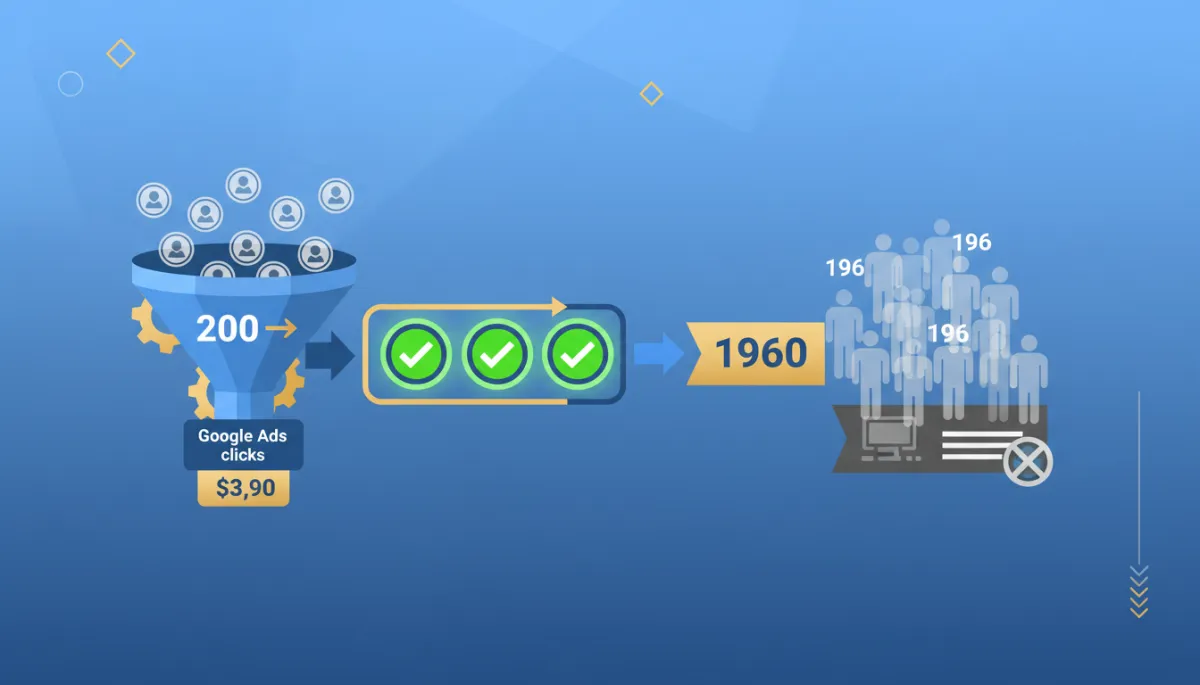
Google Ads visitor identification is the practice of matching paid search traffic — the clicks you already bought — to real, named individuals with phone numbers and email addresses, even when they never fill out a contact form. Every “non-converting” click is not a number in a dashboard. It is a person who searched, saw your ad, clicked it, browsed your site, and left without a trace.
Google got paid either way. Right now, you are eating the loss. Google Ads visitor identification is how you get the name — and the opportunity — back.
The Google Ads Math That Should Make You Angry
Let us keep the math simple so it is easy to see what is really happening in your account. Forget benchmarks for a moment and look at a clean, round example you can relate to your own campaigns.
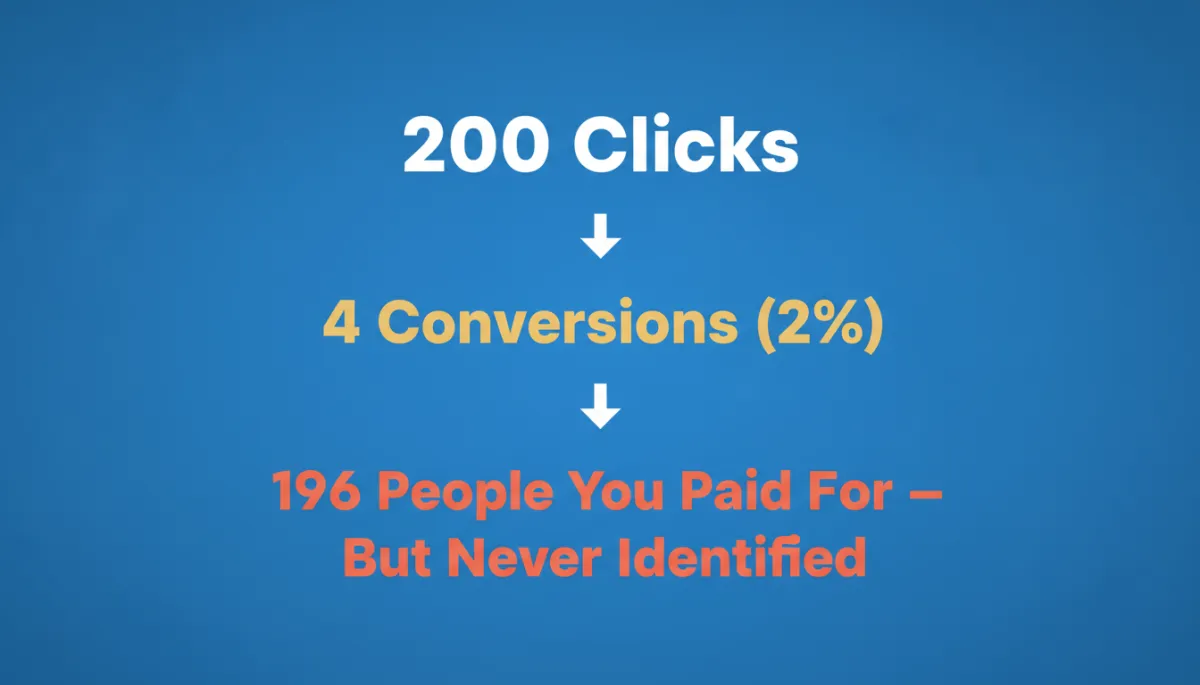
- 200 people click your Google Ad.
- 4 people convert — they fill out a form or call you (that is a 2% conversion rate).
- 196 people click, visit your site, and leave without a single follow-up from your team.
Now layer in cost. At $5 per click, those 200 clicks cost you $1,000 total. You got 4 conversions you can see and work. The other 196 people are invisible in your CRM — but you still paid for every one of them.
- 200 clicks × $5 per click = $1,000 spent.
- 4 conversions you can see, 196 people who never became contactable leads.
If you think of it another way, that is $980 spent on people you never identified — 196 clicks × $5 per click. They were interested enough to search, click, and look around your site, but you have no way to call or email them.
“If you are converting a tiny slice of your paid clicks and ignoring the rest, you are not running Google Ads — you are running an expensive lottery and hoping the right people fill out your form.”
With Google Ads visitor identification, those 196 “lost” visitors do not stay invisible. You get names, emails, and phone numbers for a meaningful share of them. Same ad spend. Same traffic. Completely different pipeline.
What Retargeting Gives You vs. What Identification Gives You
You might be thinking, “We already retarget those visitors.” Retargeting is useful. You can follow past visitors around the web with display ads, YouTube ads, and Gmail placements to stay in front of them.
But retargeting is anonymous by design. You are paying to chase a nameless audience segment. You cannot pick up the phone, you cannot send a direct email, and you cannot hand them to your sales team as real leads. You are renting attention, not building a pipeline.
Google Ads visitor identification flips that script. Instead of following anonymous visitors with more ads, you match the click session to an identity graph and get back a name, email, and phone number. Now you can call them, email them, and drop them into your sales sequence — within minutes of their visit, while they are still comparing options.
One strategy spends more money to “stay visible.” The other recovers more of the value from the clicks you already bought. As a business owner or marketer, you care about opportunities your team can actually work, not just impressions and audiences.
How SpyderAlert Turns Google Ads Traffic Into Real-Time Sales Opportunities
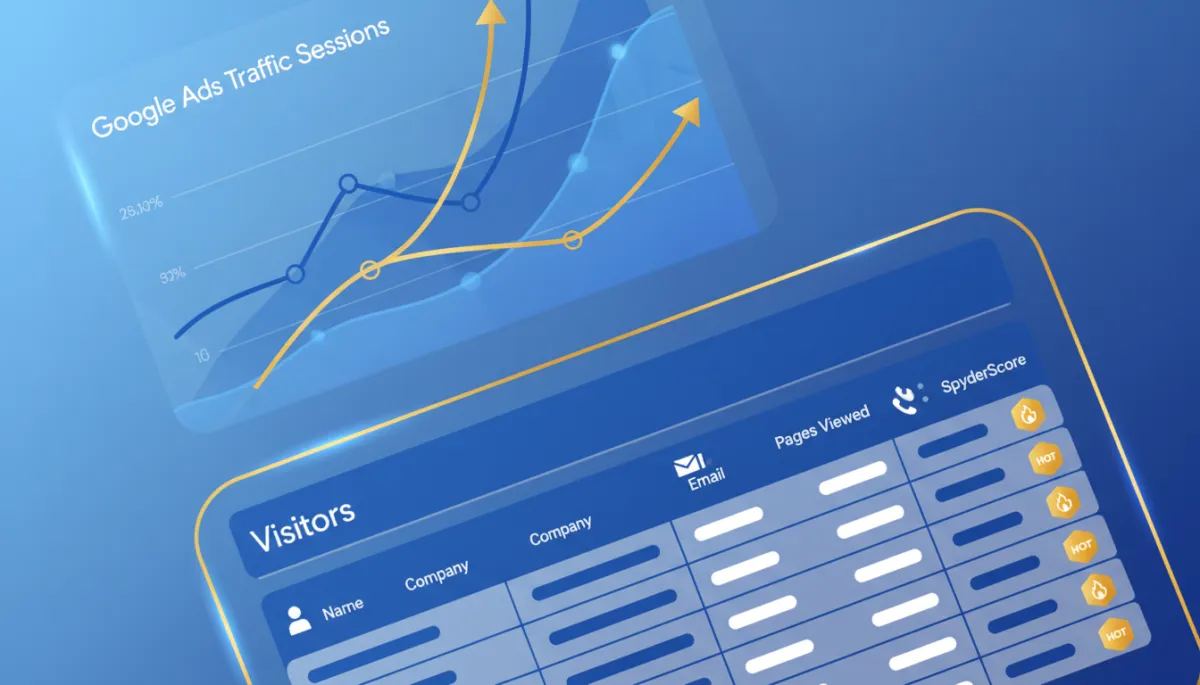
LeadSpyder’s SpyderAlert is built specifically to fix the “I paid for them, but I cannot see them” problem in Google Ads. It fires a real-time notification to your sales team the moment a high-intent visitor lands on your site from a paid search click and scores HOT on SpyderScore.
Your rep gets a contact card that looks something like this:
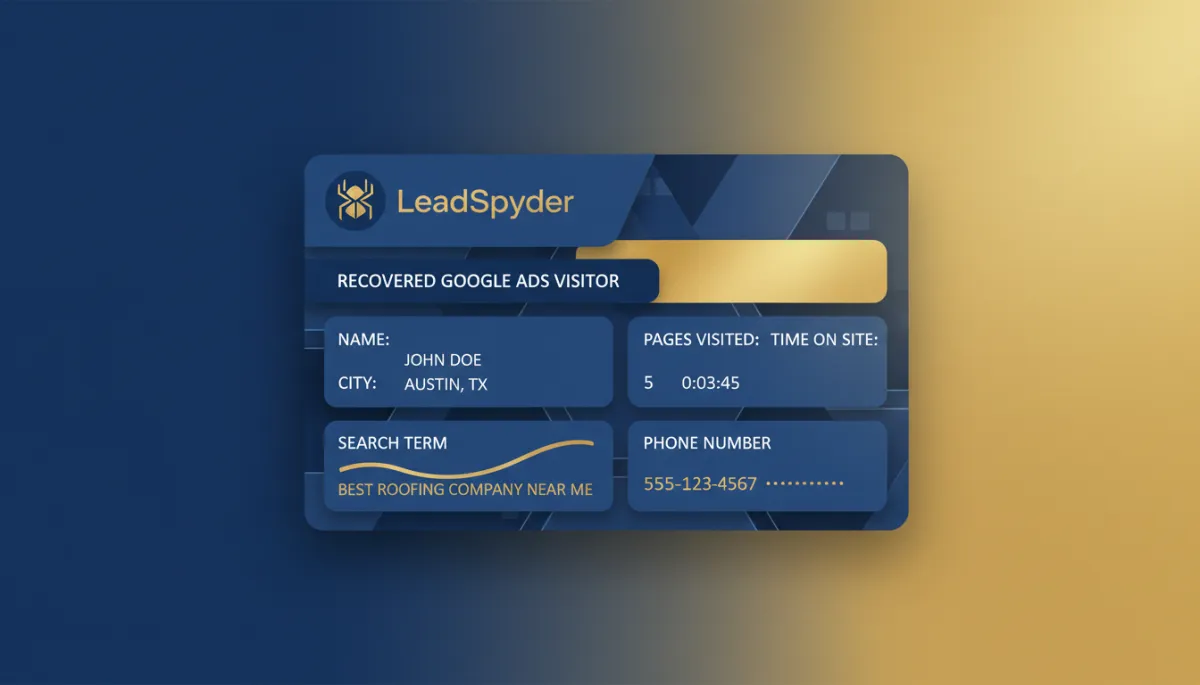
- The visitor’s name and contact information (email and phone).
- The Google Ads campaign and search term that brought them in, like “best roofing company near me.”
- Which pages they visited and how long they spent on each one.
That alert lands while the visitor is still in research mode. Maybe they clicked your roofing ad, read your storm damage page for four minutes, and checked your financing options. Your rep calls and says, “I saw you were looking at our storm damage services — I can get you a free estimate today.”
That conversation feels relevant and timely, because it is. It beats a cold follow-up days later — or worse, never calling at all — every single time.
Where Google Ads Visitor Identification Hits Hardest
Visitor identification has the clearest impact in high-intent, high-ticket service businesses — the kinds of companies that feel every wasted click. Think about industries like roofing, solar, legal, and HVAC where a single new customer can be worth thousands of dollars.
- Roofing companies working storm damage traffic in peak season.
- Solar installers running campaigns around tax credits and energy savings.
- Personal injury law firms paying high cost-per-click on competitive terms.
- HVAC companies running emergency repair and replacement campaigns in summer and winter.
The higher your cost-per-click and the lower your current conversion rate, the more Google Ads visitor identification recovers from the spend you already have. You do not have to outbid your competitors to win — you just have to stop wasting the clicks you are already buying.
Frequently Asked Questions
What is Google Ads visitor identification?
Google Ads visitor identification is the process of matching paid search traffic to real, named individuals using an identity graph. It returns contact information for visitors who click your ads but never fill out a form, turning the majority of your “non-converting” clicks into contactable leads with names, emails, and phone numbers.
Does Google give me this data already?
No. Google gives you click data, conversion tracking, and audience segments. It does not give you the names, emails, or phone numbers of the people who clicked your ads. Visitor identification with a third-party pixel and identity graph fills that gap and routes those identities into your sales workflow.
How quickly should I contact a visitor identified from a Google Ads click?
As fast as possible — ideally within a few minutes for high-intent visitors. Paid search traffic has active, present-tense commercial intent. The closer your outreach is to the moment they were on your site, the higher your chances of turning that click into a real conversation.
How is this different from Google’s retargeting?
Retargeting shows ads to anonymous groups of past visitors. You never learn who they are. Visitor identification returns specific names, emails, and phone numbers so your team can call, text, or email them directly. One lets you spend more money on anonymous people. The other gives you a direct line and a way to measure real pipeline impact from your ad spend.
Your traffic already has names on it. You just cannot see them yet. If you are tired of paying for clicks that disappear, it is time to change that.
[Start Free 7-Day Hunt] — https://leadspyder.ai/start
No contract. 30-day money-back. Live in under 10 minutes.