Home Services Lead Generation: Every Angi Lead You Bought Had Four Other Bidders
Home Services Lead Generation: You Already Paid for the Leads
Home services lead generation is really just this: keeping your schedule full with homeowners who are ready to book, without giving away your margin to a middleman.
If you are in plumbing, electrical, landscaping, cleaning, pest control, or any similar trade, you already know the drill. Platforms like Angi, HomeAdvisor, and Thumbtack collect homeowner intent, then sell that same lead to multiple contractors at once.
Every time you buy one of those shared leads, three to five of your competitors get it too. You all call the same homeowner, quote the same job, and race to be first to pick up the phone.
LeadSpyder flips that dynamic. You already paid to bring traffic to your own site. Identification turns that traffic into exclusive homeowner contacts where you call first and you are the only contractor in the conversation.
The Shared Lead Game: How Angi, HomeAdvisor, and Thumbtack Really Work
Shared lead platforms run on a simple model. They capture a homeowner searching for “plumber near me” or “lawn service weekly,” then sell that homeowner’s info to multiple contractors at the same time.
Angi and similar platforms typically send each lead to three to five contractors in the same instant. Everyone pays for the same contact. Everyone calls the same homeowner. Only one wins the job.
Lead costs vary by category, but the range is consistent. You will usually see something like $15 to $85 per shared lead depending on the trade and job type.
That might sound fine at first glance, but the math only works if you are closing a strong percentage of those shared leads. In reality, close rates on shared leads are low because the homeowner gets bombarded with calls.
The Math: Shared Leads vs. Real Jobs
Let’s walk through the numbers in a conservative way. Assume you are paying an average of $50 per shared lead across your mix of services. Some are $20 drain calls, some are $70 electrical jobs, and some are in between.
On shared platforms, contractors commonly see close rates in the low single digits. If you close 4% of shared leads, that means you need about 25 leads to land one job.
At $50 per lead, 25 leads cost you $1,250 just in lead spend. That is before labor, materials, fuel, or overhead.
Home services job values vary a lot by trade and type of work, but a reasonable range is $300 on the low end to $5,000+ on the high end. On a $300 job, that shared-lead math is upside down. Even on a $2,500 or $4,000 job, you are handing away a big chunk of gross revenue before you ever roll a truck.
Why the Race-to-Respond Kills Your Margins
Shared leads turn your business into a speed contest. The platform does not care who is best. It cares that multiple people are paying for the same homeowner’s contact info.
The homeowner does not see a ranked list of contractors. They just see a flood of calls and texts. The first one that gets through and sounds competent usually wins. That first-mover advantage is real.
The problem is that most home services companies are not built for sub-five-minute response times on every single inquiry. You have techs in the field, office staff juggling calls, and a real business to run.
In practice, many contractors end up calling 20, 30, or 40 shared leads a week and booking only a handful of jobs. The rest of that lead spend just disappears into the race.

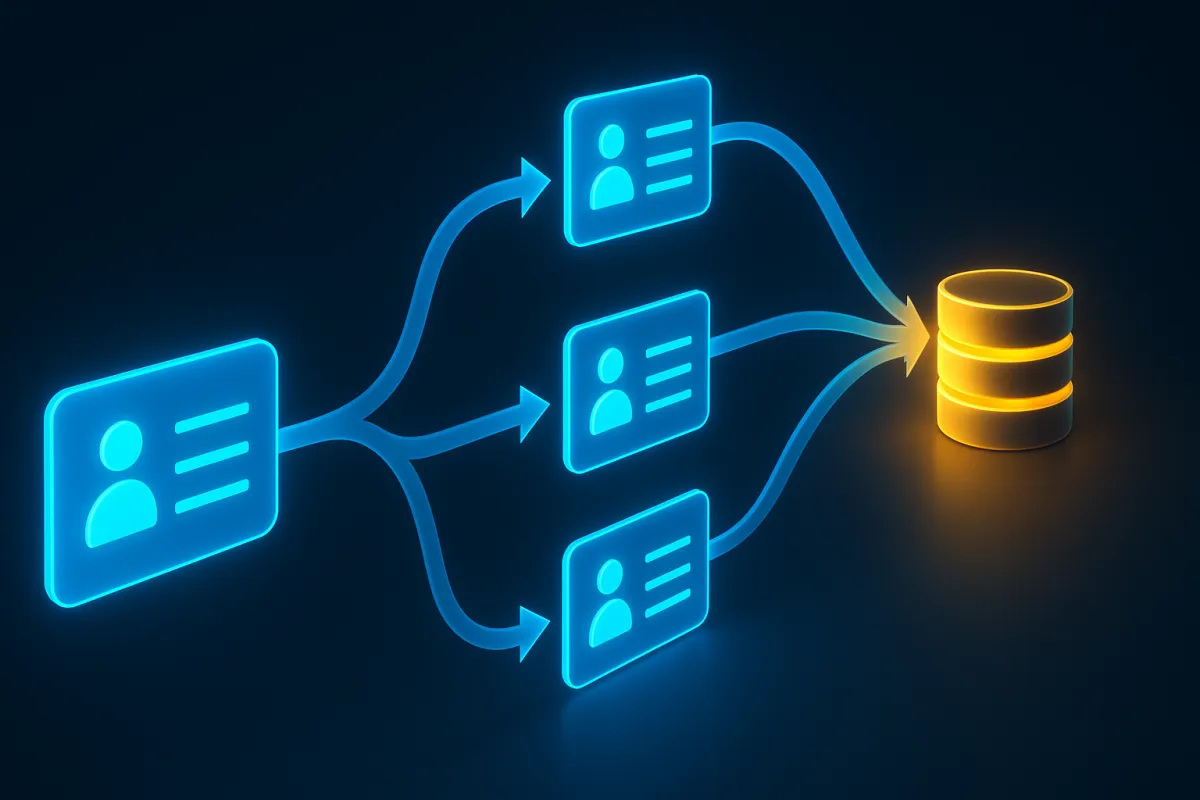
On the left, you have the shared lead model: $15 to $85 per lead, sent to three to five contractors, and a mad dash to respond first.
On the right, you have LeadSpyder: leads identified from your own website traffic, exclusive to you, and you are the only contractor calling that homeowner.
You Already Paid for the Traffic. LeadSpyder Finds the Homeowners.
Here is the part most contractors miss. You are already paying to get homeowners to your website. You pay through Google Ads, local SEO, yard signs, truck wraps, door hangers, and word of mouth.
Every day, homeowners land on your site, click around, read your reviews, and look at your services. Most of them leave without filling out a form or calling. On shared platforms, that same homeowner might go fill out a form later and get sold back to you as a “new lead.”
LeadSpyder’s visitor identification changes that. When a homeowner browses your site, we match a portion of those visitors to real contact information.
Those identified visitors are not shared. They are exclusive to you. No other contractor sees that data. You already bought the traffic. Now you actually get the leads.
Identification Math: From Anonymous Visits to Named Homeowners
Let’s use a simple example. Say your home services website gets 1,500 visitors per month across all channels. That is a realistic number for many local contractors.
With visitor identification, you can expect a match rate in the 20% to 40% range, depending on your traffic mix and region. That means:
- At 20% match, 1,500 visitors become about 300 named homeowners.
- At 40% match, 1,500 visitors become about 600 named homeowners.
Those are people who were already on your site, looking at your services, pricing, and reviews. They did not come from a shared platform. They did not see three to five other contractors at the same time.
Now, instead of paying $50 for a shared lead that three competitors also got, you are turning your own traffic into exclusive contacts that only you can call.

A typical LeadSpyder lead card shows you who the homeowner is, where they are located, which pages they viewed, how long they stayed, and how to contact them.
If someone spent time on your “Services,” “Pricing,” “Reviews,” and “Book Online” pages, you know they are not just browsing. They are shopping for a contractor now.
Exclusive vs. Shared: Why the First Call Feels Different
There is a big difference between calling a shared lead and calling someone who was just on your site. With a shared lead, the homeowner is usually annoyed. Their phone is blowing up with unknown numbers and pushy sales pitches.
With an identified visitor, you are calling someone who was literally just reading about your company. They saw your logo, your trucks, your reviews, and your guarantees.
You can open the call with context: “Hi, this is Sarah from ABC Plumbing. I saw you were checking out our drain cleaning services and wanted to see how we can help.”
That does not feel like a cold sales call. It feels like a helpful follow-up from the company they were already considering.
What This Looks Like Across Different Trades
Plumbers, electricians, landscapers, cleaners, pest control companies, and other home services all share the same problem. You need a steady flow of good jobs without burning profit on bad leads.
For lower-ticket jobs around $300 to $500, you cannot afford to spend hundreds of dollars in shared lead costs just to win a single small job. The math collapses fast.
For higher-ticket work in the $2,000 to $5,000+ range, you might tolerate higher acquisition costs, but you still do not want to give away 20% to 30% of your gross revenue just to get the phone to ring.
Visitor identification gives you a way to tap into demand that is already coming to your brand, instead of renting it from a marketplace that also promotes your competitors.
Simple Plan to Reduce Shared Lead Dependency in 90 Days
You do not have to cancel Angi, HomeAdvisor, or Thumbtack tomorrow. The smarter move is to phase them down as your identified lead volume ramps up.
Here is a straightforward 90-day plan many contractors can follow without disrupting their schedule or cash flow.
Month 1: Add Identification on Top of What You Already Do
In month one, you keep your existing shared lead budget in place. Do not change anything yet. Instead, you install LeadSpyder on your website so it can start identifying visitors.
As those identified leads come in, track a few simple numbers: how many named homeowners you get, how many you contact, and how many turn into booked jobs.
This gives you a clean baseline. You can compare what you are paying per booked job from shared platforms versus what you are paying per booked job from your own traffic.
Month 2: Reallocate 30% of Shared Budget to Your Own Traffic
In month two, you shift about 30% of your shared lead budget into channels that send traffic straight to your website. That might be Google Ads, Local Services Ads that click through, or other direct-response campaigns.
All of that new traffic flows through the identification layer. You are now paying to grow your own traffic and capturing more of it as exclusive leads.
At the same time, you keep tracking the numbers: cost per identified lead, cost per booked job, and how those compare to your shared lead performance.
Month 3: Compare ROI and Cut What Is Not Working
By month three, you have enough data to make real decisions. You can see how much revenue came from shared leads and how much came from identified visitors on your own site.
If identified leads are delivering similar or better close rates at a lower effective cost per job, you now have the confidence to cut back on the shared platforms.
Many home services companies find they can reduce shared lead spend by 50% to 70% within a few months without losing volume. They simply replace those leads with exclusive contacts from their own traffic.
The goal is not to stop advertising. The goal is to own the customer relationship from the first click, instead of renting it from a marketplace that is also selling your competitors.
Frequently Asked Questions
What is home services lead generation?
Home services lead generation is the process of getting homeowners who need work done and turning them into booked jobs on your calendar. That can be plumbing, electrical, landscaping, cleaning, pest control, or any similar service.
Traditional channels include Angi, HomeAdvisor, and Thumbtack, which sell shared leads to multiple contractors at once. Visitor identification tools like LeadSpyder turn your own website traffic into exclusive homeowner contacts at a more predictable cost.
Why do Angi and HomeAdvisor shared leads often have low close rates?
Because the same homeowner is sold to three to five contractors at the same time, everyone is racing to respond first.
In that environment, the first caller has a big advantage, and many contractors do not have the systems to respond within a few minutes every time. That leads to low overall close rates and a lot of wasted lead spend.
How does visitor identification change the lead dynamic?
With visitor identification, you are not buying a shared contact from a marketplace. You are identifying homeowners who were already on your website looking at your services.
You get their name and contact information, plus context on what they viewed. You call first, and you are the only contractor in that conversation. There is no race against three or four other companies.
How does seasonal traffic impact results?
Seasonal spikes are where identification really pays off. In peak season for your trade, your website traffic usually jumps because more homeowners are searching for urgent help.
When you have identification in place, those spikes translate into more identified leads, not just more anonymous visitors. You capture more of the demand you already created, instead of letting those homeowners drift to shared platforms later.
You already paid for the leads. LeadSpyder just makes them visible.
Start your free 7-day hunt — https://leadspyder.ai/start
No contract. 30-day money-back guarantee. Up and running in under 10 minutes.