
Personal Injury Law Lead Generation: The Broker Math Has a Better Answer
Personal Injury Law Lead Generation: The Broker Math Has a Better Answer
Personal injury law lead generation is supposed to be straightforward.
Injured people need help. Your firm is ready to step in.
But if you are like most PI firms, you are stuck on the broker lead treadmill and it is wearing you out.
Lead brokers dominate PI lead generation today.
They run the Google Ads and TV spots, collect claimant information, and then sell those leads to multiple firms at once.
Typical price: $200–$500 per lead, and that same person is usually shared with 3–5 other firms in your market.
You know what happens next.
Your intake team is chasing the same injured person as four other firms, usually all within the same hour.
Close rates are low, costs keep rising, and every month it feels like you are paying more just to stand still.
At LeadSpyder, we hear the same story from PI attorneys and marketing directors every week.
You are spending heavily on broker leads, but you are not seeing the return you used to.
Our tagline sums it up: You already paid for the leads.
You just are not seeing the ones already on your site.
Personal Injury Lead Generation: What Broker Leads Actually Cost
Let’s put real numbers to what you are paying for shared broker leads.
- Typical PI broker lead cost: $200–$500 per shared lead.
- Each lead is usually sold to several firms at the same time.
- Realistic close rate on shared PI leads: around 5% if your intake is fast and disciplined.
Here is the math your marketing manager is living with.
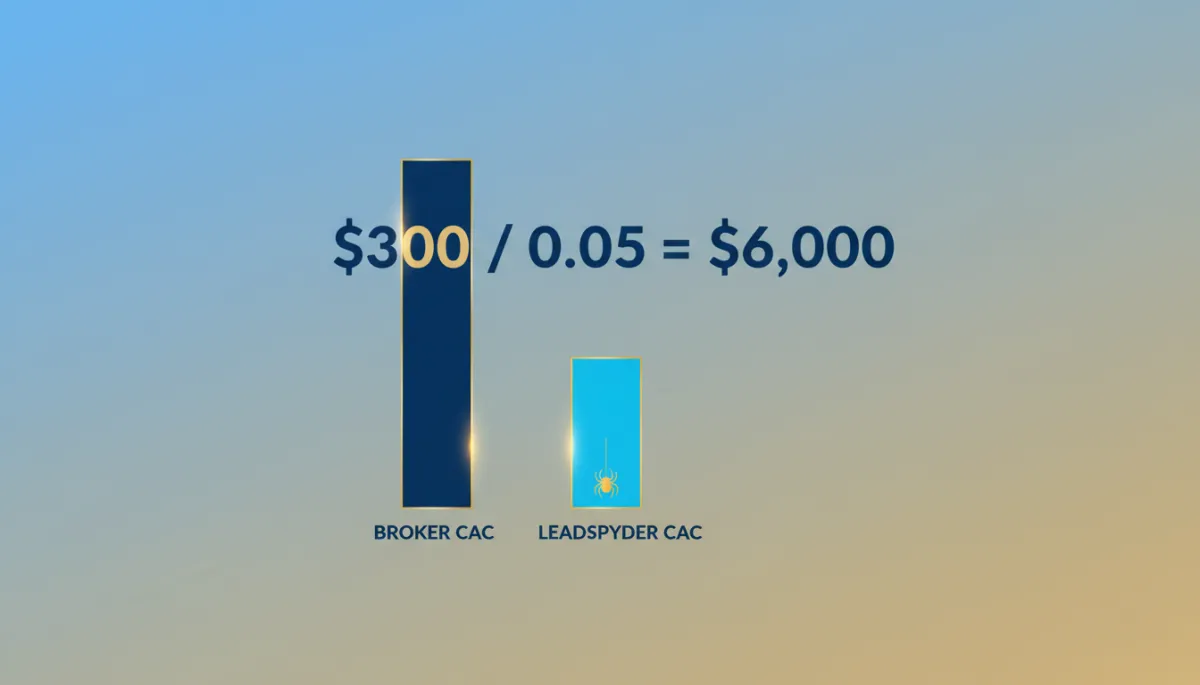
Take a middle-of-the-road lead price of $300.
At a 5% close rate, you need 20 leads to sign one client.
$300 × 20 = $6,000 customer acquisition cost (CAC) per signed client.
Now compare that to your typical PI case value.
For most firms we talk to, the attorney fee per case on a modest settled matter lands somewhere between $15,000 and $50,000+.
That means broker CAC alone can eat a big chunk of your fee before you pay staff, experts, or overhead.
With that math, one bad month of broker performance can wipe out your margin.
And every year, the competition for those same shared leads gets tougher and more expensive.
Why Broker Leads Are Getting More Expensive and Less Effective
The problem is not just the price tag.
It is the entire shared-lead model.
In PI, everyone is bidding on the same high-intent keywords.
Think search terms like “car accident lawyer near me” or “personal injury attorney in [your city].”
Brokers and directories spend heavily to win those clicks, then pass that cost on to you with a markup.
So when you buy a broker lead, you are not just paying for the injured person’s contact information.
You are also subsidizing the broker’s ad budget and profit margin.
Meanwhile, your intake team is fighting uphill.
By the time your firm calls, that injured person may have:
- Filled out multiple comparison forms.
- Spoken to other firms already.
- Started to ignore calls from unknown numbers.
The urgency of the initial moment has faded.
The lead is colder, more skeptical, and less responsive.
Even if your team does everything right, your close rate is capped by the fact that you are the third, fourth, or fifth call.
That is why we built LeadSpyder around a different idea.
Instead of renting cold, shared leads from brokers, you can work the warm, high-intent traffic you already have.
The Texas PI Firm Case Study: Broker Budget vs. Identified Traffic
Consider a mid-sized personal injury firm in Houston.
They were spending heavily on broker leads every month and feeling the squeeze.
The pattern looked like this:
- $7,000 per month paid to a lead broker.
- Shared leads sold to multiple firms at once.
- Low, unstable close rates and unpredictable signed cases.
At the same time, their website was getting steady traffic from search, referrals, and past marketing.
Accident victims were reading their FAQs, checking reviews, and clicking the “Free Consultation” page.
But unless those visitors filled out a form or called, they disappeared.
After installing LeadSpyder’s WebNet pixel, the story changed.
The firm started to identify real people behind their anonymous traffic.
They could see which visitors:
- Visited “Car Accident Lawyer” or “Slip and Fall” pages.
- Stayed on the site for several minutes.
- Came back more than once over a few days.
Those visitors were already interested in that specific firm.
They just had not taken the final step yet.
That is where the math flips in your favor.
How LeadSpyder Identifies PI Website Visitors (Without Breaking Ethics Rules)
Here is the core of how LeadSpyder works for PI firms.
LeadSpyder identifies people who are already visiting your website.
These are accident victims, injured workers, or family members asking, “Do I have a case?”
On typical PI firm traffic, we see a 20–40% match rate.
That means for every 1,000 visitors in a month, LeadSpyder can often identify 200 to 400 of them by name and contact details.
The math is simple:
- 1,000 visitors × 20% match rate = 200 identified contacts.
- 1,000 visitors × 40% match rate = 400 identified contacts.
These are not random cold contacts pulled from a generic list.
These are people who:
- Typed your firm’s name into Google or clicked on your brand in search.
- Visited your “Car Accident” or “Work Injury” practice pages.
- Scrolled through your FAQs or “Free Case Review” page.
Ethically, this all happens before any attorney–client relationship exists.
They have not hired you, and you have not agreed to represent them.
Your outreach is a business development contact, not legal representation.
You still follow your state bar’s rules for attorney advertising and prospective client outreach.
Most jurisdictions allow outreach by phone or email with proper disclosures, and you should confirm the rules where you practice.
Your ethics obligations do not change; your visibility into your own traffic does.
Meet SpyderAlert: Be the First Firm to Reach Out
Identifying visitors is only half of the advantage.
The other half is speed.
In PI, the first helpful, empathetic firm to respond usually wins the case.
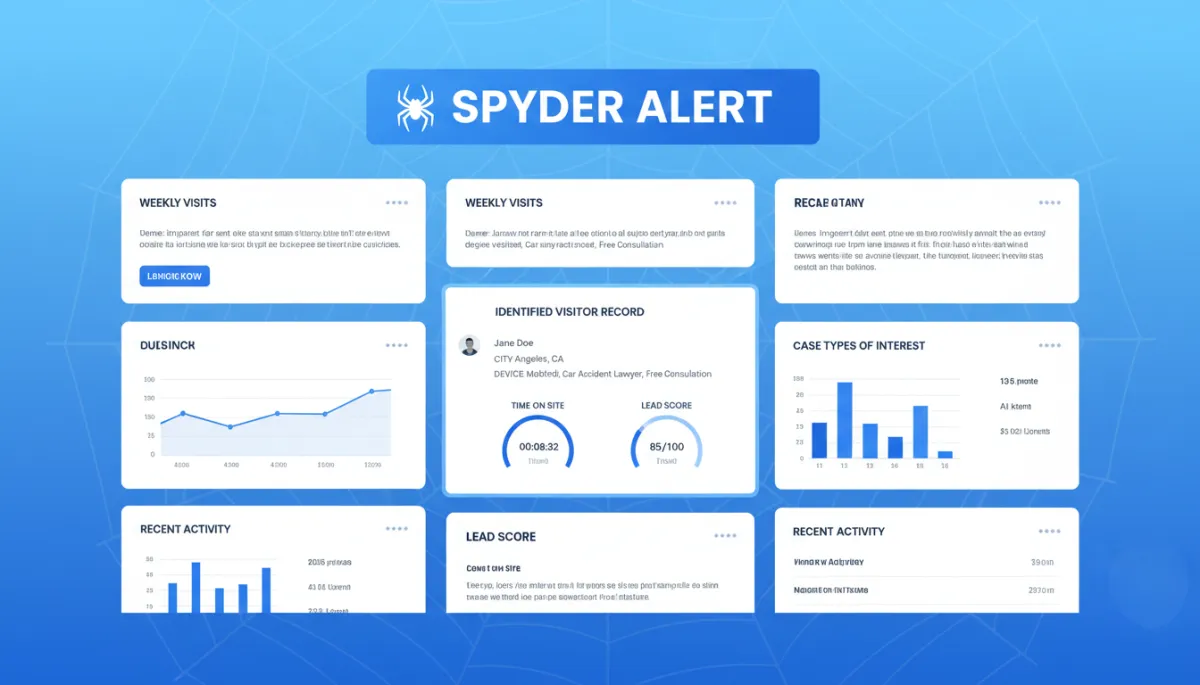
SpyderAlert is LeadSpyder’s real-time notification system.
When someone visits key pages on your site, your intake team gets an alert.
Think of pages like:
- “Car Accident Lawyer” or “Truck Accident Lawyer.”
- “Slip and Fall” or “Premises Liability.”
- “Free Consultation” or “Do I Have a Case?”
As soon as a visitor hits those pages and meets your criteria, SpyderAlert fires.
Your intake coordinator can call, text, or email while the visit is fresh in the prospect’s mind.
Instead of chasing a cold, shared broker lead, you are reaching out to someone who was just on your site.
This is where the economics shift.
Instead of paying $300 for a shared lead and hoping for a 5% close rate, you are working exclusive, high-intent contacts who came to you directly.
Even a small number of signed cases from identified traffic can make more sense than sending the same dollars to a broker every month.
How PI Firms Should Structure Identified Visitor Outreach
Once you can see who is on your site, the next question is how to reach out.
Two things matter more than anything else: speed and empathy.
Remember the context.
The person you are calling may have been in an accident in the last 24–48 hours.
They are in pain, stressed, and trying to make a big decision quickly.
Your first contact sets the tone for the entire relationship.
Lead with help, not with a hard pitch.
For example, an opener like this often feels better to the prospect:
“I noticed you were looking at information about accident claims on our site. I wanted to make sure you have everything you need to protect your rights.”
That feels very different from:
“Are you looking for a lawyer?”
Use your existing intake scripts, but adjust them for this context.
They came to you first. They are not a cold list from a broker.
Your job is to meet them where they are, answer questions, and guide them forward if they want help.
Frequently Asked Questions
What is personal injury law lead generation?
Personal injury law lead generation is the process of connecting injured people with PI firms that can represent them on a contingency basis.
Traditionally, that has meant buying broker leads at $200–$500 per shared lead and competing with several other firms for the same person.
With LeadSpyder, you generate exclusive contacts from your own website traffic instead of renting them from a broker.
How do personal injury firms get leads today?
Most PI firms use a mix of Google Ads, TV, billboards, referrals, and legal lead brokers.
All of that spend drives people to search for your firm or for PI help in your area.
LeadSpyder adds a new channel: identifying who is already on your website and helping you contact them before they choose another firm.
Why does speed matter so much for PI lead follow-up?
Because injured people often make attorney decisions fast.
They may talk to multiple firms in a short window and hire the first one that feels responsive and trustworthy.
The firm that responds quickly in a helpful, human way wins a much higher share of cases.
Is visitor identification legal for PI law firms?
Yes, when done correctly and in line with your jurisdiction’s ethics rules.
Identification happens before any attorney–client relationship exists, so your outreach is a business development contact, not legal representation.
You still follow the same rules your state bar sets for attorney advertising and prospective client outreach, and you should verify how those rules apply in your state.
How much does LeadSpyder need to deliver to pay for itself?
Look at your typical fee per case.
If your average attorney fee is between $15,000 and $50,000+ on settled cases, then even one additional signed case from identified traffic can cover the cost of the tool and more.
From there, every additional case is margin you are no longer handing to brokers.
Your traffic already has names on it. You just cannot see them yet.
[Start Free 7-Day Hunt] — https://leadspyder.ai/start
No contract. 30-day money-back. Live in under 10 minutes.