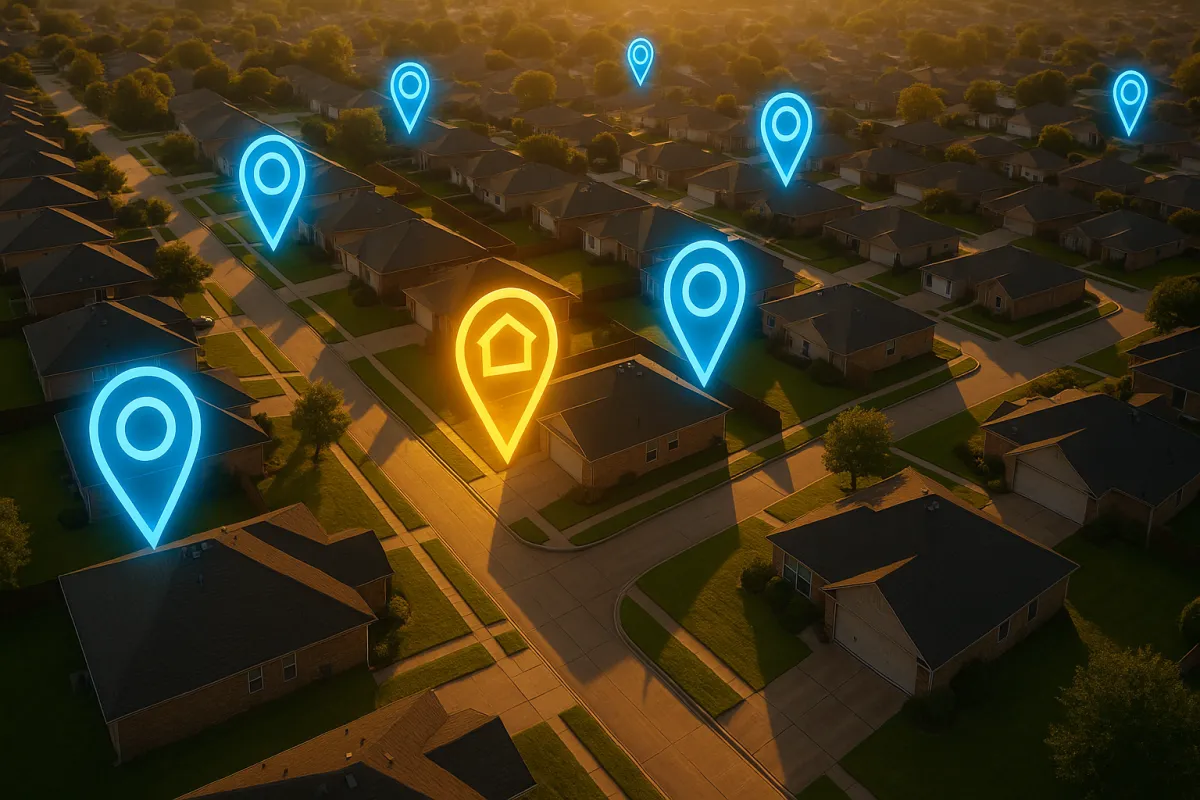
Real Estate Investor Lead Generation: Who's Looking at Your Properties?
Real Estate Investing, Lead Generation, Visitor Identification
Real Estate Investor Lead Generation: Who's Looking at Your Properties?
You already paid for the leads. You paid for the website, the listings, the content, maybe even the ads that drive people there. The traffic is real. The problem is that almost no one tells you who they are.
Real estate investor lead generation is about turning that anonymous traffic into names, phone numbers, and warm conversations. Whether you wholesale, flip, hold rentals, or syndicate, serious buyers and motivated sellers are already looking at your deals online. Most will never fill out a form. Visitor identification tells you who they are before they bounce to Zillow, LoopNet, or the next investor’s site.
This isn’t about getting more clicks. It’s about finally seeing the people behind the clicks you’re already getting, and turning them into closings.

Image text: “800 Monthly Visitors to Your Listings. Only 16 Inquire. 784 Looked and Left Without a Word.” LeadSpyder blue background (#1d79c7), gold accent numbers, white text, three stacked lines, no charts.
The Real Estate Investor Lead Generation Cost Landscape
Let’s talk cost, because that’s how investors think. You already know what it takes to get a decent lead in real estate. None of it is cheap, and most of it is shared or noisy.
- Zillow Premier Agent CPL: About $20–$60 per lead for residential, often shared with up to 3 agents (Zillow Premier Agent pricing, 2024).
- Off‑market data tools (Propstream, etc.): Roughly $99–$399/month plus data fees (Propstream public pricing).
- Direct mail for motivated sellers: Around $50–$200 per inbound response (REI Nation benchmarks).
- Visitor identification: Typically $18–$35 per named contact on real estate sites (LeadSpyder internal ranges).
- Average residential commission per deal: Roughly $12,000–$22,000 (based on NAR 2024 median home price data).
For investors, wholesale deal profits often land in the $10,000–$30,000 range. You don’t need a huge volume of deals for the math to work. You just need a reliable way to see who is actually looking at your deals.
On Zillow, the buyer staring at your listing is also staring at three competing agent ads on the same page. You paid to be there. Zillow uses that spend to showcase your competitors. That’s the trade. You get access to traffic, but not control of the relationship.
When the traffic is yours—your listings, your content, your investor site—you should own the leads that come with it. Visitor identification lets you do exactly that.
What Your Traffic Is Really Doing (And Why Forms Don’t Tell the Story)
Most real estate sites convert only 1–3% of visitors into actual inquiries. That means 97 out of 100 people who look at your deals never call, text, or submit a form.
Imagine your investor site pulls in 800 visitors a month to your listings, deal pages, or “sell your house fast” page. At a 2% inquiry rate, that’s about 16 inquiries. The other 784 visitors looked, evaluated, and left without saying a word.
With a conservative 20–40% match rate, visitor identification can turn those 800 visitors into roughly 160–320 named contacts per month. Same traffic. Same pages. Completely different outcome.
That’s the difference between “my site gets some calls” and “my site quietly feeds me a steady stream of buyers and sellers every week.”
How Visitor Identification Works for Real Estate (vs. Typical Service Businesses)
In most service businesses, an identified visitor is someone with an immediate problem—plumber, lawyer, dentist. They search, click, and call. Simple. Real estate investing doesn’t work like that.
Real estate buyers, especially investors, research for weeks or months. They revisit the same listing pages, run numbers on calculators, and compare neighborhoods. A single long session doesn’t tell you much. Repeat behavior does.
LeadSpyder tracks those patterns. Someone who hits a specific triplex deal page three times in five days, checks your cap rate calculator, and then comes back to your “available deals” page is not casually browsing. They’re doing due diligence.
That repeat pattern scores high on SpyderScore. When they cross your threshold—say, the third visit—your SpyderAlert fires. You get a notification with their name, contact info, and the exact pages they viewed. Your outreach hits while that property is still front‑of‑mind, not two weeks later when they’re already under contract somewhere else.
In real estate, return visits are stronger buy signals than long single sessions. Visitor identification is built to catch those signals.

Image description: a clean LeadSpyder‑style contact card in blue and gold showing an investor’s name, city, pages visited (e.g., “Available deals page, ROI calculator, Contact page”), time on site, and phone number.
Buyer Identification: Who’s Quietly Evaluating Your Deals
Serious investors with real capital almost never fill out a form on the first visit. They’ve been pitched badly too many times. They prefer to watch you from a distance before they ever talk to you.
They browse your portfolio, read deal summaries, and click into your track record or “about” page. They might even bookmark a couple of properties. Then they leave without giving you a name, email, or phone number.
The LeadSpyder pixel captures those sessions and matches them to a large U.S. identity graph. When one of those visitors views three different properties and your investor FAQ, that’s a buyer in evaluation mode—not a cold lead.
Your outreach can sound like this: “I saw you were reviewing our Dallas triplex and a couple of the other multifamily deals. I wanted to see if you had any questions on the numbers before they go under contract.” That’s not a cold call. That’s a targeted, context‑rich conversation with someone who already knows who you are.
Warm, specific outreach like that closes at a completely different rate than generic investor calls that start with, “So, what are you looking for?”
Motivated Seller Identification: Catch Them Before They List
If you hunt off‑market deals, you know the cost of staying in front of sellers. Direct mail, door knocking, driving for dollars—none of it is cheap, and all of it is time‑intensive.
Visitor identification gives you a digital version of that same “I was there first” advantage. A property owner who hits your “sell your house fast” page, reads your cash offer process, and checks your FAQ about timelines is signaling intent. Without identification, they’re just another anonymous bounce in Google Analytics.
With LeadSpyder, that same visit turns into a contact record. You see their name, phone, and the exact pages they viewed. You can reach out the same day they were on your site instead of hoping they come back later.
The bigger picture on why owning your traffic beats renting someone else’s platform is covered here: https://leadspyder.ai/blog/exclusive-leads-vs-shared-leads. The short version: when you own the traffic and the data, you own the relationship and the upside.
Deal Math: What One Extra Closed Lead Is Worth
Let’s keep the math simple. If your average wholesale profit is between $10,000 and $30,000, one extra closed deal from your existing traffic can easily cover months of visitor identification.
Using the earlier example—800 monthly visitors and a 20–40% match rate—getting 160–320 named contacts per month doesn’t mean you’ll close all of them. You don’t need to. You just need a small fraction to turn into deals.
Even if only a handful of those contacts turn into serious conversations each month, the math is still heavily in your favor. You already paid to get those people to your site. Leaving them anonymous is where the real cost hides.
Frequently Asked Questions
What is real estate investor lead generation?
Real estate investor lead generation is the process of identifying buyers, sellers, and co‑investment partners before they engage through a listing portal or agent. Instead of waiting for someone to fill out a form, you use visitor identification to generate named contacts from people who view properties or deal information on your site.
How does visitor identification work for real estate investment websites?
A lightweight JavaScript pixel runs on your site and tracks anonymous sessions—property listing views, portfolio pages, FAQs, calculators, and more. Those sessions are then matched to a large identity graph of U.S. profiles. Return visitors who repeatedly view specific properties or deals score highest on SpyderScore and trigger priority SpyderAlert notifications.
Why do real estate investors rarely fill out contact forms?
Experienced investors are cautious. They prefer to do their own due diligence before giving out their contact information. They browse deals anonymously, run their own numbers, and only reach out when they’ve already decided a deal might fit. Visitor identification lets you capture those research sessions and turn them into proactive outreach opportunities.
How is Zillow different from owning my own real estate traffic?
On Zillow, your listing appears alongside competing agent advertisements. The buyer you want is being shown multiple options on the same page. When you own your traffic through a branded website with visitor identification, the buyers and sellers who visit are exclusively yours. No competing ads, no shared leads, no marketplace in the middle.
Next Step: Start Hunting the Leads You Already Paid For
Your traffic already has names on it. You just can’t see them yet. LeadSpyder makes those hidden buyers and sellers visible so you can call them before someone else does.
If you’re driving traffic to listings, investment property pages, or motivated seller content, you’re already paying for leads—whether you capture them or not. The question is simple: do you want to keep guessing who’s on your site, or start talking to them?
Start your free 7‑day hunt with LeadSpyder → https://leadspyder.ai/start
No contract. 30‑day money‑back guarantee. Live in under 10 minutes. You already paid for the leads. Now it’s time to see them.