
Roofing Lead Generation in 2026: The Angi Math Doesn't Work Anymore
Roofing Lead Generation in 2026: The Angi Math Doesn't Work Anymore
If you run a roofing company in 2026, this probably sounds familiar. You log into Angi or HomeAdvisor, grab a few shared leads, call fast, and still hear, “Sorry, we already booked someone else.”
You paid real money for those leads. But each one was sold to 3–5 other roofing contractors at the same time, so you are really just buying a small slice of a chance. Meanwhile, hundreds of homeowners are quietly hitting your website and leaving without a trace.
This post walks through the simple math on shared leads, what your own traffic is actually worth, and how LeadSpyder helps you see what is already there. Because with LeadSpyder, you already paid for the leads — now you can finally see them and work them.
What Roofing Leads Really Cost on Angi and HomeAdvisor
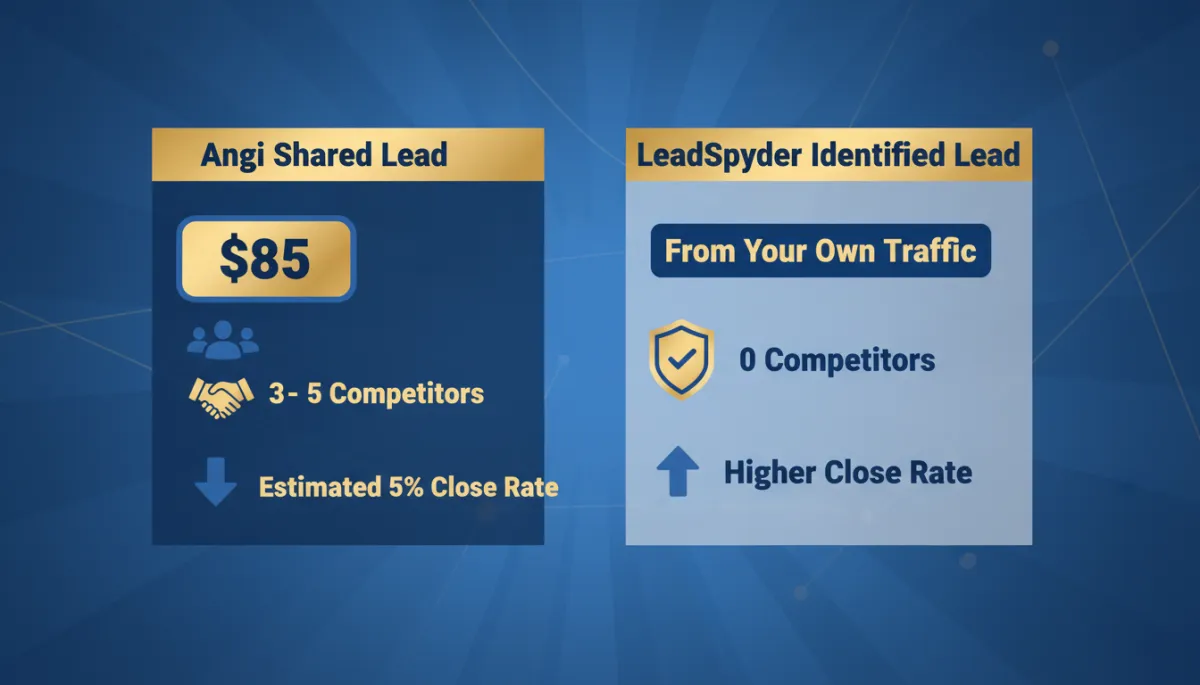
Angi shared roofing leads typically cost anywhere from $15 to $85 each. HomeAdvisor is in the same range. The exact number moves up or down based on ZIP code and project type, but the model does not change: you are renting attention on someone else’s platform.
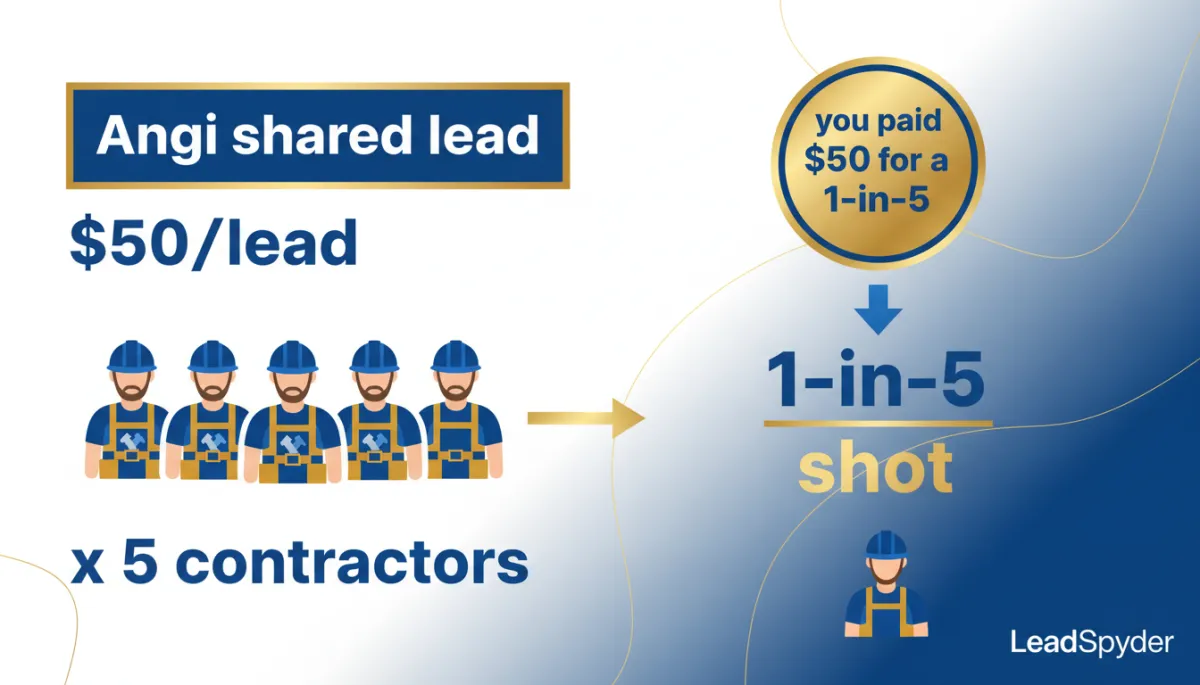
Here is the important part most roofers feel but do not always calculate. Those same homeowners are usually sold to 3 to 5 contractors at the same time. So you are not buying an exclusive shot. You are buying a ticket in a small raffle.
- You pay: $50 per shared lead as a simple middle-of-the-road example.
- Angi or HomeAdvisor sells that same homeowner to 3–5 roofers.
- Your odds: you paid $50 for a 1-in-3 to 1-in-5 shot, not a real appointment.
Let’s keep the math simple and assume those leads are sold to five roofers and you close one out of every five shared leads. Your effective cost per job looks like this:
$50 per lead × 5 leads per job = $250 per closed job
Many roofing companies see lower close rates on shared leads, especially when homeowners are price shopping hard. That pushes your real cost per job even higher — before labor, materials, or overhead ever hit the project.
Why Shared Leads Feel So Bad (It Is Not Just You)
Shared leads are built to favor the platform, not the roofer. A homeowner fills out one form, clicks submit, and within minutes their phone is buzzing with calls and texts from multiple contractors.
Whoever dials first usually gets the appointment. If you are even ten minutes behind, you are often just “quote number three” used to pressure the first roofer on price. You feel it every day as:
- Reps burning time chasing homeowners who already booked someone else.
- “Tire kicker” appointments where the homeowner is clearly collecting four or five bids.
- Rising lead costs with no real control over quality or intent.
At the same time, there is a group of homeowners you already paid to get in front of: the ones visiting your own website. They are looking at your name, your photos, and your reviews — and then most of them leave without ever filling out a form.
Your Website Traffic Is Already Paid For
Think about everything you are already doing to drive traffic: Google Ads, Local Service Ads, SEO, yard signs, wrapped trucks, door hangers, referrals. Every one of those channels pushes homeowners toward your website or your brand.
A typical roofing site with some marketing behind it can easily see around 2,000 visitors per month, especially in storm season. In Google Analytics, they show up as “users” and “sessions.” In real life, they are homeowners in your service area, on your site, reading about your services.
The only problem is that you cannot see who they are. They click around, they leave, and you are back to buying shared leads to talk to people you already paid to attract. You already paid for those leads. You just do not have names and numbers yet.
What LeadSpyder Does: Turn Visitors into Named Homeowners
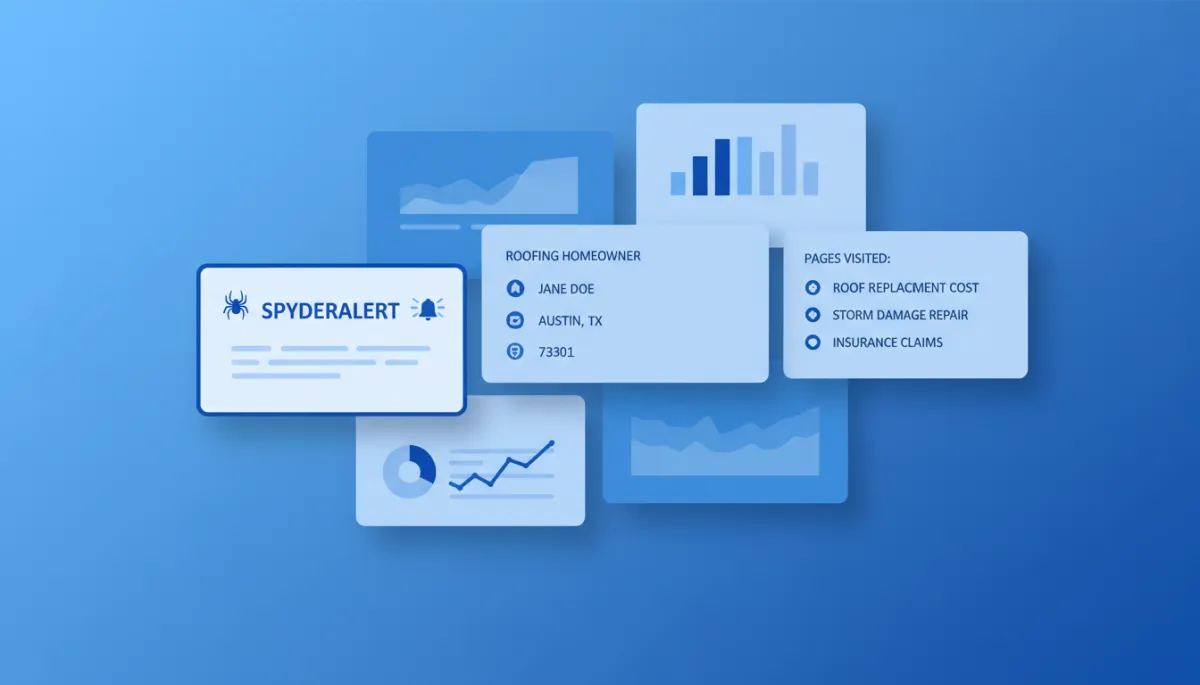
LeadSpyder installs as a simple JavaScript pixel on your roofing website. From that moment forward, every visit becomes an identification opportunity instead of just a number in an analytics chart.
For a roofing site with 2,000 monthly visitors, LeadSpyder typically identifies between 20 and 40 percent of that traffic as real people. The math is straightforward and easy to follow:
- 2,000 visitors × 20% match rate = 400 named homeowners.
- 2,000 visitors × 40% match rate = 800 named homeowners.
These are people who were already on your site, looking at your roofing services, pricing, financing, or storm damage pages. Now you have a name, a way to contact them, and context on what they cared about. You did not rent them from an aggregator — you earned them from your own marketing.
SpyderAlert: Call the Homeowner While They Are Still on Your Site
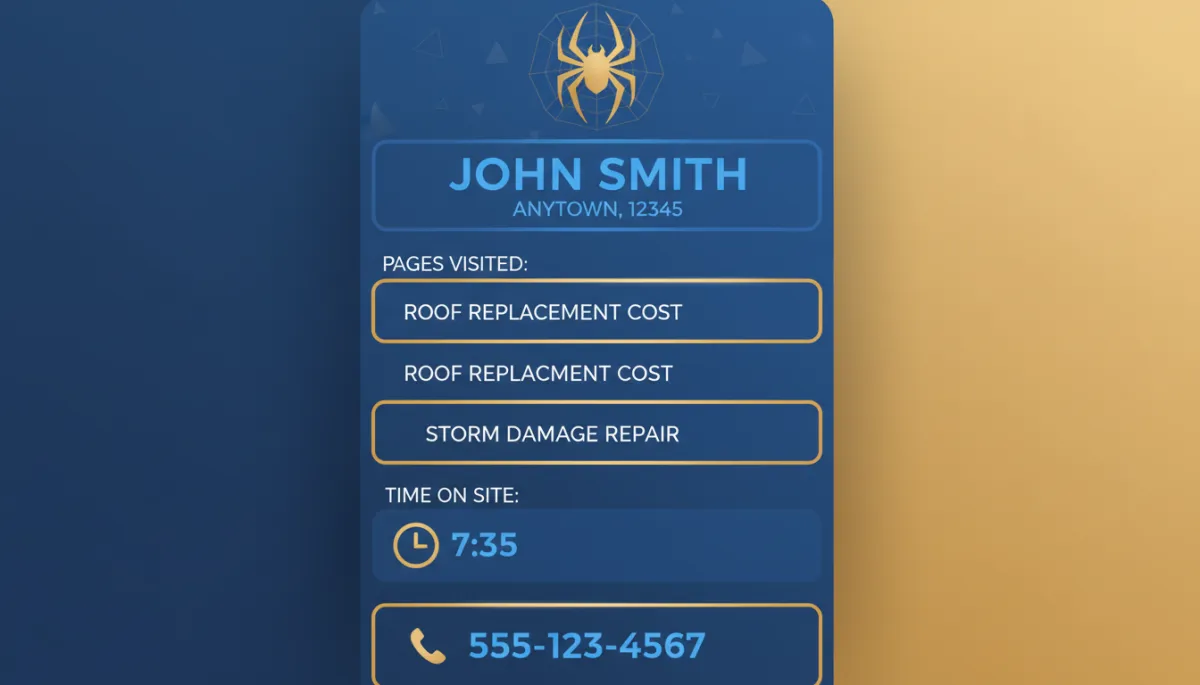
SpyderAlert is the notification engine inside LeadSpyder built specifically for roofing sales teams. It tells you who is on your site and what they are looking at while they are still in buying mode, not days later.
Here is how that looks in real life:
- A homeowner in your service area searches “roof replacement cost near me” on Google.
- They click your ad or organic result and land on your Roof Replacement Cost page.
- The LeadSpyder pixel identifies them and scores the visit as high intent based on the pages they view.
- SpyderAlert fires to your sales rep with their name, general area, and pages viewed.
Your rep can call or text right away with a simple, relevant opener: “Hey, I saw you were looking at roof replacement pricing on our site. We are doing free inspections in your neighborhood this week if you would like a straight answer on cost.”
This is not chasing a beat-up shared lead where four other roofers are calling at the same time. This is your visitor, on your site, before they ever fill out a form on Angi or HomeAdvisor.
The Money Math: One Roofing Job Covers the Tool
Most roof replacements land somewhere in the $8,000 to $15,000 range. Your exact average ticket might be higher or lower, but that is a solid national window for full replacement work.
If LeadSpyder helps you close even one extra job per month from identified traffic, that single project more than covers the cost of the platform for most roofing companies. After that, you are stacking margin you were previously handing to lead brokers.
- One closed job at $8,000 easily pays for the tool with profit left over.
- Every additional job from identified traffic is revenue you did not have to fight 3–5 competitors for.
A Month in the Life: From 2,000 Visitors to Real Conversations
Let’s put it all together with one simple month. Say your roofing site gets around 2,000 visitors over 30 days. With LeadSpyder running, you are no longer blind to who those people are.
- LeadSpyder identifies 20–40% of them: 400 to 800 named homeowners.
- SpyderAlert highlights the hottest visitors: people on your pricing, storm damage, or financing pages.
- Your reps start each morning returning high-intent SpyderAlerts, not cold, over-shared leads.
You will not close all 400 to 800, and you do not need to. Even a small slice of those identified homeowners turning into booked inspections and signed contracts can replace a big chunk of what you are currently spending on shared platforms.
Getting Started: Live in Under 10 Minutes
Setting up LeadSpyder for roofing is straightforward. There is no website redesign, no new CRM requirement, and no big tech project to slow your team down.
- Add the LeadSpyder pixel to your website. Your web person can usually do this in a few minutes.
- Turn on SpyderAlert for your sales reps with their preferred notification method.
- Connect identified contacts to your CRM or follow-up process if you already use one.
Most roofing companies see their first identified visitor within hours of going live. Storm traffic, insurance claim shoppers, and replacement research visits that used to disappear now show up as names your team can actually call and convert.
Frequently Asked Questions
What is roofing lead generation in 2026?
Roofing lead generation today is about more than buying shared leads from aggregators. It is the process of turning your own traffic into exclusive conversations before homeowners ever fill out a form on Angi or HomeAdvisor. LeadSpyder helps you do that by identifying the people already visiting your site and surfacing them to your team.
How much do roofing leads cost on Angi?
Angi shared roofing leads typically run between $15 and $85 each. Those same homeowners are sold to 3–5 competing contractors. At $50 per lead and five leads per job, you are effectively paying around $250 per closed job, and often more when close rates drop.
How does LeadSpyder identify visitors on my roofing website?
LeadSpyder uses a JavaScript pixel on your site to match visitor activity to real-world profiles. When a homeowner visits your pages — especially high-intent ones like pricing or storm damage — the system can return their information and send it to your team in near real time so you can follow up while interest is high.
What exactly does SpyderAlert do for my sales reps?
SpyderAlert notifies your team the moment a qualified homeowner is on your site. Your reps see who visited, what they looked at, and when. That lets them call or text first, while the homeowner is still thinking about their roof, instead of fighting multiple roofers over a shared lead that has already gone cold.
Why does this matter if I am already getting jobs from shared leads?
Shared leads can still bring in work, but they come with high competition and rising costs. LeadSpyder helps you own more of your pipeline by working the traffic you already paid for. Even if you keep some shared leads in the mix, you are no longer dependent on them to keep your crews busy.
Your traffic already has names on it. You just cannot see them yet. With LeadSpyder, you already paid for the leads — now you can actually work them instead of renting them back from someone else.
[Start Free 7-Day Hunt] — https://leadspyder.ai/start
No contract. 30-day money-back. Live in under 10 minutes.