Solar Lead Generation: The Aggregator Math Is Worse Than You Think
Solar Lead Generation: The Aggregator Math Is Worse Than You Think
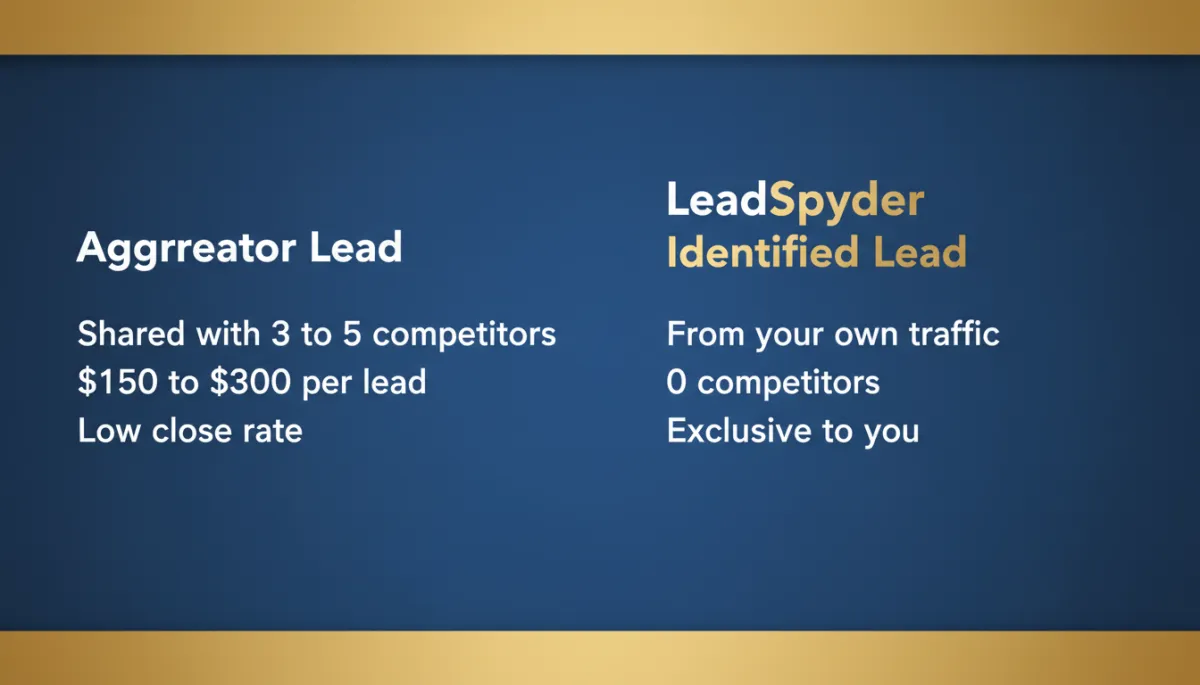
If you run a solar company in 2026, chances are you are buying leads from aggregators like EnergySage, SolarReviews, or similar marketplaces. They sit on top of Google, collect homeowner interest, and then sell that same person to three to five installers at the same time. On the surface, the price per lead looks reasonable. But once you do the math on your actual close rate, the real customer acquisition cost (CAC) is often one of the most expensive line items in your business.
Most installers never slow down to calculate that fully loaded CAC. They see a $200 lead, win a few jobs, and assume it is working. At LeadSpyder, we are math-honest about lead gen. Our tagline is simple and literal: You already paid for the leads. The real question is whether you keep renting those same homeowners back from aggregators, or start capturing the people already on your own site as exclusive leads.
What Solar Lead Generation Actually Costs Right Now
Let’s start with the current market reality for solar lead generation. No hype, just simple, clearly labeled numbers you can check against your own books. We will keep everything in round, realistic ranges so you can plug in your own data later.
- Aggregator shared solar leads: typically $150 to $300 per lead, sold to 3 to 5 installers at once on comparison platforms.
- Average close rate on shared leads: many installers see around a 5% close rate when they are one of several quotes in a table.
- Average residential solar installation value: often in the $20,000 to $35,000 range per system, depending on market and system size.
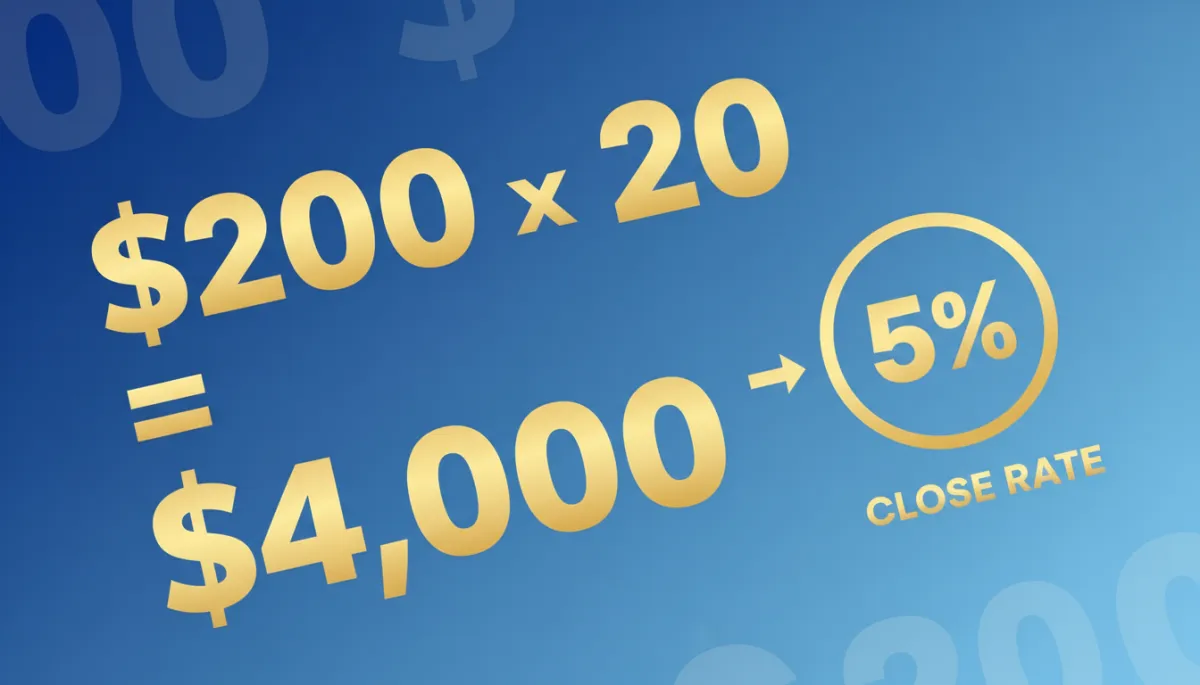
Now let’s run the math on a simple, realistic example. We will stay conservative and transparent so you can follow every step. Assume you pay $200 per shared lead and you close 5% of them. That means you need 20 leads to close one deal.
- 20 leads × $200 per lead = $4,000 CAC for one closed job.
That is the real cost of a customer from shared aggregator leads in this example: roughly $4,000 in CAC per closed deal. If your lead price or close rate is different, your number may land somewhere in a $3,000 to $6,000 range per job, but the structure is the same. You are paying a lot to win one homeowner who was also sold to several of your competitors.
On a $30,000 install, that $4,000 CAC eats about 13% of gross revenue before you buy equipment, pay your team, cover permitting, or pay commissions. If your average system is closer to $20,000, that same $4,000 CAC is an even bigger slice. Many installers are running thin or negative margins on aggregator jobs without realizing it, because they never add up the full math on a per-deal basis.
Why Aggregators Work Against Solar Installers Over Time
Aggregators are not villains. They are just doing what is best for their business, not yours. Their model is simple: control homeowner attention, and then resell that attention to as many installers as possible. The more installers on a lead, the more revenue they make from each homeowner who raises their hand.
When a homeowner starts their solar journey on EnergySage, SolarReviews, or another marketplace, they build trust with the platform, not with your brand. You show up as one of several quotes in a comparison table. The default filter becomes price, even if you run a better crew, offer stronger warranties, or have deeper local roots. You are forced into a race to the bottom where speed to call and discounting matter more than quality.
Every dollar you send to aggregators also trains homeowners to start their solar research on those platforms. You are effectively funding the machine that commoditizes you. Over time, that makes your marketing more expensive and your differentiation weaker. You keep paying higher and higher CAC just to stay in the game you did not design.
You Already Paid for the Leads: The Hidden Asset on Your Website
Here is the part most installers miss. While you are wiring money to aggregators for shared leads, hundreds of real homeowners are already visiting your own website every month. You paid for that traffic through Google Ads, SEO, yard signs, referrals, and your brand. Those visitors are your hidden asset, but most of them stay invisible because they never fill out a form.
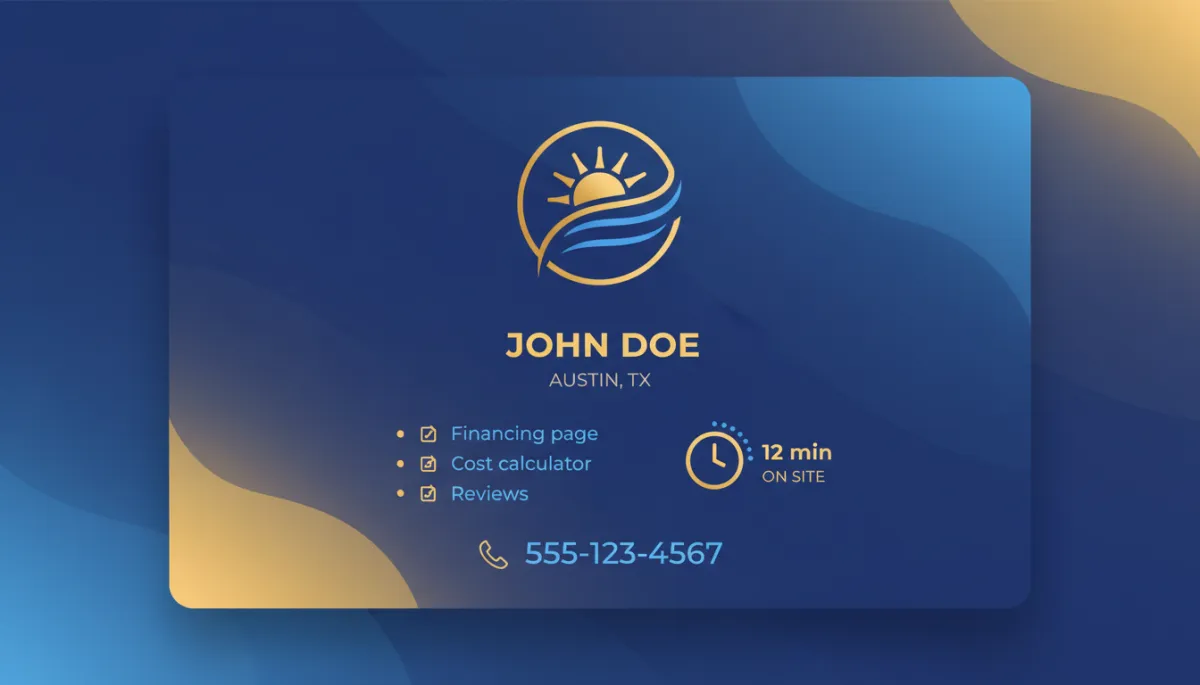
Without visitor identification, those people remain anonymous. They click your financing page, your solar calculator, your reviews, and maybe your project gallery. Then they go back to Google, click an aggregator ad, and become a shared lead that gets sold back to you and three to five of your competitors. You essentially pay twice for the same homeowner: once to get them to your site and again to buy them back as a shared lead.
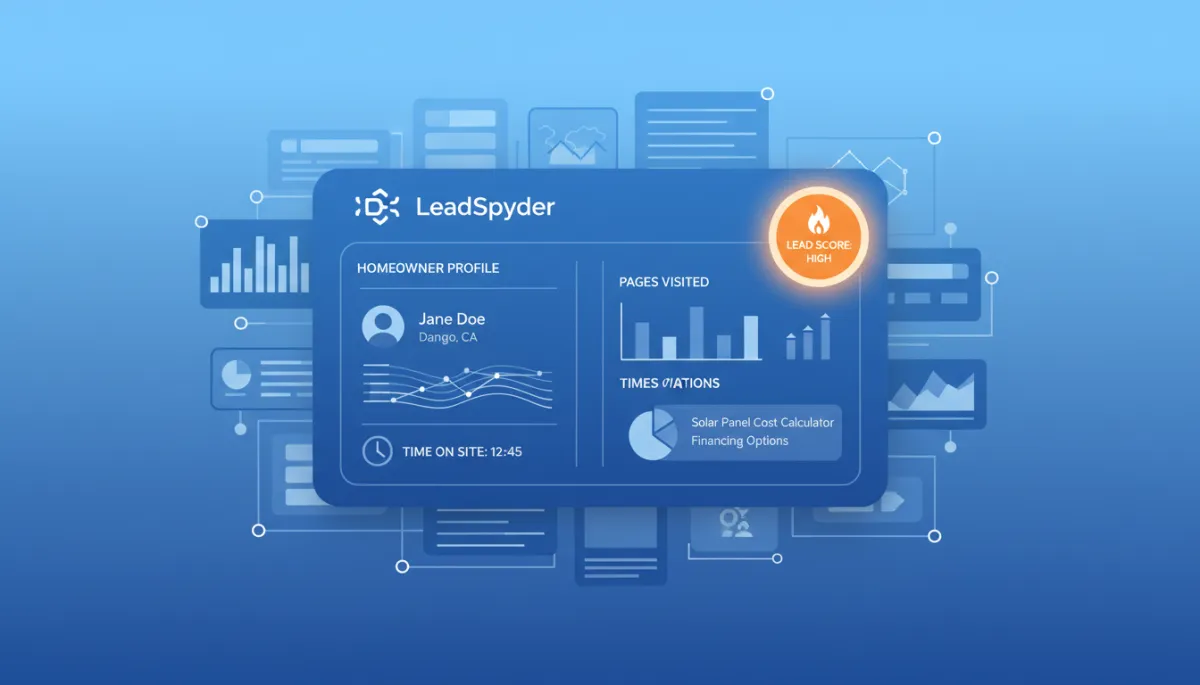
LeadSpyder flips that script. Our visitor identification engine can identify 20% to 40% of the homeowners already visiting your solar website and turn them into named contacts your team can call or email. Let’s keep the math simple. If your site gets 1,500 visitors per month, a 20% to 40% match rate means:
- 1,500 visitors × 20% = 300 named homeowners per month.
- 1,500 visitors × 40% = 600 named homeowners per month.
These are not cold lists you bought from somewhere random. These are people who were just on your site looking at solar pricing, incentives, and installation info in your service area. They know your brand. They have already seen your value props. You are simply meeting them earlier, before an aggregator resells them.
What a 27x ROI in Month One Actually Looks Like
Here is a real-world style scenario from a Texas solar installer using LeadSpyder. The numbers are rounded for clarity, but the structure is the same pattern we see again and again. This installer had a solid website and was already driving about 4,200 monthly visitors from Google Ads focused on IRA incentives and solar savings keywords. They were also spending around $6,000 per month on aggregator leads.
- Before LeadSpyder: roughly 40 aggregator leads per month, leading to about 3 closed installs at approximately $29,000 each.
- That is around $87,000 in gross revenue with $6,000 in lead costs, plus all of the normal project expenses.
After installing the LeadSpyder WebNet pixel, the installer started identifying 20% to 40% of their existing visitors. From that same 4,200 monthly visitors, they saw roughly 840 to 1,680 identified contacts per month. The hottest visitors were scored and flagged in near real time so the team knew exactly who to call first.
- HOT-scored visitors (for example, people who visited the solar calculator and financing pages multiple times) were pushed to the team within minutes via alerts.
- The sales team focused on those high-intent contacts and saw around an 18% close rate on that HOT segment.
The result: 10 additional installations in month one from traffic they were already paying for. When they compared the profit from those extra jobs to the cost of the LeadSpyder subscription, the effective ROI was more than 27x in the first month. In month two, they cut their aggregator budget by about 60% because they no longer needed as many shared leads to hit their numbers.
If you want to go deeper into why the shared-lead model breaks down structurally for installers, you can read more at: https://leadspyder.ai/blog/stop-buying-shared-leads. But the core takeaway is simple: exclusive leads from your own traffic beat shared leads from aggregators almost every time.
How Solar-Specific Visitor Identification Works
Solar buyers rarely convert on the first visit. Most homeowners take 60 to 90 days from first search to signed contract. That window is filled with research, comparison, and second-guessing. During that time, they bounce between your site, competitor sites, and aggregator sites while they figure out who to trust and how much they will really save.
During that research journey, a typical homeowner might do a few very clear things on your site:
- Visit your solar panel cost calculator multiple times to test different scenarios.
- Read your financing and loan options page to see how to pay for the system.
- Check your equipment specs and warranties to compare quality and guarantees.
- Compare your reviews and project photos with other installers in your area.
Every one of those visits is an identification opportunity. LeadSpyder matches anonymous visitors against our identity graph and returns their name, email, and phone number when we have a confident match. Our scoring engine looks at behavior across that full research journey. Someone who hits your calculator three times in two weeks, checks panel specs, and revisits your reviews is a HOT prospect.
We flag that visitor while they are still in active research mode, before they ever fill out a form on an aggregator site. Your sales team calls a homeowner who already knows your brand and your pricing. That homeowner never becomes a shared lead on a comparison platform. They are exclusively yours from day one, and your effective CAC drops because you are not fighting four other installers for the same person.
The IRA Opportunity: Why 2026 Solar Traffic Is More Valuable Than Ever
The Inflation Reduction Act has pushed residential solar interest to multi-year highs. Search volume for solar panels, tax credits, and home energy upgrades is elevated across the country. That means two things for you as an installer: more people are looking, and many of them have a clear financial reason to act now instead of waiting a few years.
- Your website traffic in 2026 is likely higher than it was a few years ago as more homeowners search for solar and incentives.
- The homeowners arriving are often more financially motivated, with clear tax credits and savings on the table.
Every visit you get this year is more valuable than it was before the IRA. Running that traffic through a visitor identification layer like LeadSpyder converts more of it into pipeline without increasing your ad spend. With an average install in the $20,000 to $35,000 range, one closed exclusive deal can often cover months of LeadSpyder cost. After that, every additional closed deal from identified visitors is pure upside compared to aggregator math.
For a deeper breakdown of how solar-specific visitor identification works in practice, including examples and implementation details, visit: https://leadspyder.ai/industry/solar. If you want to see it on your own traffic, you can start a live test in just a few minutes.
Frequently Asked Questions
What is solar lead generation?
Solar lead generation is the process of finding homeowners who are interested in solar and turning them into paying customers. Traditional channels include lead aggregators like EnergySage and SolarReviews, which sell the same shared lead to several installers at once. Visitor identification takes a different path by generating exclusive leads from your own website traffic at a lower effective cost per acquisition.
How much do solar leads cost from aggregators?
Aggregator solar leads usually cost in the $150 to $300 per lead range. Those leads are sold to multiple installers at the same time, which drives down your close rate and drives up your true CAC. At a 5% close rate on shared leads, you can easily end up paying roughly $3,000 to $6,000 per closed deal once you do the math end to end.
How does visitor identification reduce solar customer acquisition cost?
Visitor identification matches anonymous website visitors to an identity graph and returns their name, email, and phone when there is a confident match. Solar prospects who hit your site repeatedly—especially those checking calculators, financing, and equipment pages—are scored as HOT and sent to your team in near real time. The cost per identified contact is far lower than aggregator leads, and you are not competing against three to five other installers for the same homeowner.
Why do aggregator solar leads have such low close rates?
Because the same homeowner is handed to several installers at once. That creates a race-to-call dynamic where the first company to respond often wins, and everyone else just pays the bill. Most teams do not have a sub-five-minute response system, so they consistently lose the race and still pay high lead costs. Even when you do win, your CAC is inflated by all the leads you did not close.
Your traffic already has names on it. You just can't see them yet.
[Start Free 7-Day Hunt] — https://leadspyder.ai/start
No contract. 30-day money-back. Live in under 10 minutes.