
Speed to Lead: The Statistics Most Sales Teams Have Never Read
Speed to Lead: The Statistics Most Sales Teams Have Never Read
You already paid for the leads. The only question is whether your team talks to them while they are still excited, or after they have already booked a demo with someone else.
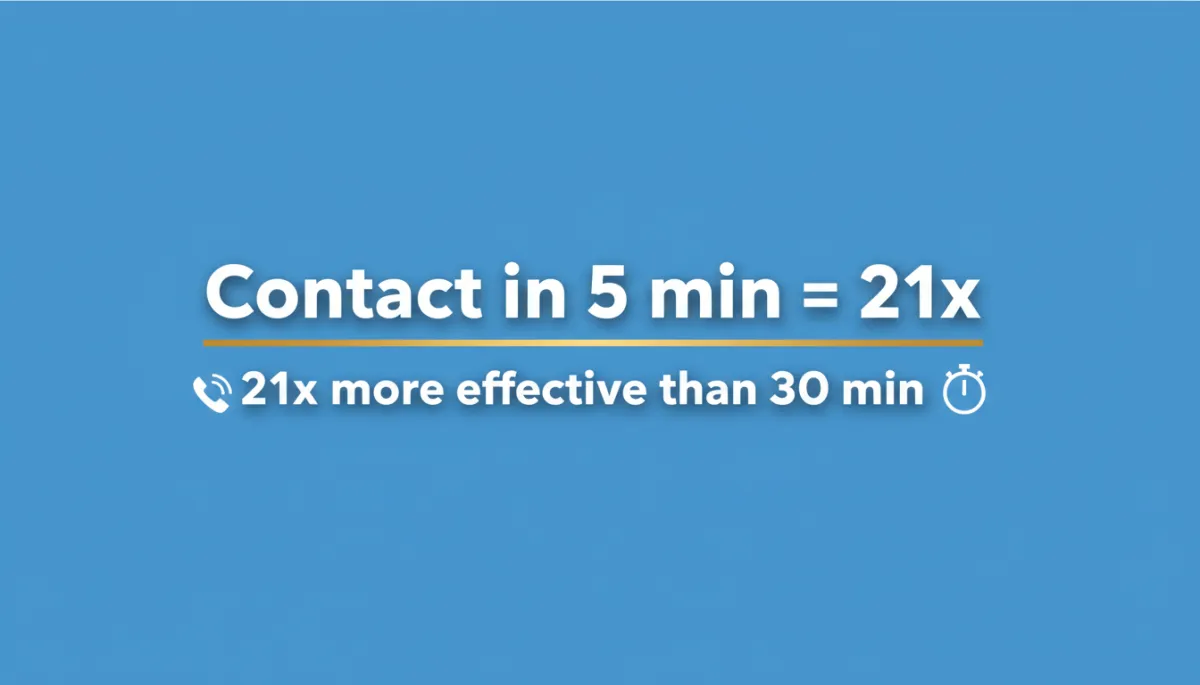
Here is the hard data: contact a lead within 5 minutes and you are 21x more likely to qualify them than if you wait 30 minutes. That is from the MIT Lead Response Management Study (2007), based on more than 100,000 leads across multiple industries.
If your team is calling back “later this afternoon” or “once they clear their inbox,” you are playing with a massive handicap. The leads are not bad. The timing is.
The Core Speed-to-Lead Stats (No Spin, Just Data)
Sales managers and founders hear “speed to lead matters” all the time. Few have actually sat with the numbers. Here are the core stats you need to know, all from large, reputable studies.
- 5 minutes vs. 30 minutes = 21x more likely to qualify — MIT Lead Response Management Study, 2007, based on over 100,000 leads.
- Responding within 1 hour makes a sales-qualified conversation 7x more likely than waiting 24 hours — Harvard Business Review, “The Short Life of Online Sales Leads,” 2011, based on 1.25 million leads.
- The average response time to an internet lead is 47 hours — InsideSales.com audit of 2,240 U.S. companies that said they cared about lead follow-up.
- 35–50% of sales go to the vendor who responds first — InsideSales.com cross-industry analysis of lead response and win rates.
Put those together and the story is obvious. Minutes beat hours. Hours beat days. And most teams are still operating on a 47-hour clock in a 5-minute world.
Why Minutes Matter More Than Messaging
Speed to lead is simple. It is the time between a prospect raising their hand and your first attempt to contact them. That “hand raise” might be a form fill, a pricing page visit, or a high-intent behavior on your site.
In those first few minutes, the prospect is in active evaluation mode. They have multiple tabs open. They are comparing you against two or three other vendors. They are thinking about the exact problem you solve, right now, in real time.
Call during that window and the MIT data says your odds of qualifying are off the charts. Wait 30 minutes and you are 21x less effective. Wait a few hours and you are basically cold calling someone who vaguely remembers your logo from earlier in the day.
The Harvard Business Review Update: The 1-Hour Cliff
In 2011, Harvard Business Review revisited the same question with a much larger dataset. They looked at 1.25 million leads across B2B companies and tracked how fast teams followed up.
Their headline finding: Leads contacted within 1 hour were 7x more likely to have a meaningful sales conversation than those contacted after 24 hours. The longer teams waited, the more contact and qualification rates fell off a cliff.
Different study, different sample, same story. The window opens fast. The window closes fast. Most teams are nowhere near that window when it is actually open.
47 Hours: The Silent Killer of Lead Programs
InsideSales.com audited 2,240 U.S. companies that all said they cared about lead follow-up. They did not ask for opinions. They measured actual response times to real internet leads.
The average response time was 47 hours. Not 47 minutes. Not “same day.” Almost two full business days before a lead got a real contact attempt. In the context of the MIT and HBR data, that is basically the worst possible place to be.
- By then, the lead is cold.
- They are already talking to someone else.
- Or they barely remember ever being on your site.
This is not usually a “lazy rep” problem. It is a system problem. Form submission goes into the CRM. Routing rules run. The lead lands in a queue. A rep finally sees it. Then they dial. Every handoff adds delay, and delay is exactly what the data says you cannot afford.
What SpyderAlert Actually Does (And Why It Matters)
LeadSpyder was built around one simple truth: You already paid for the leads. You might as well call them while they still care. SpyderAlert is the part of LeadSpyder that closes the speed-to-lead gap for inbound and outbound teams.
Here is how SpyderAlert works in practice:
- We watch your traffic in real time. When a visitor lands on your site, we score their behavior with our SpyderScore to gauge intent.
- When a visitor hits HOT status (SpyderScore 80+), SpyderAlert fires instantly. There is no waiting for a CRM sync or an overnight batch job to run.
- Your rep gets a real-time notification within seconds. The alert includes the visitor’s name, email, phone number, company when we can identify it, and their live session behavior.
- Your team can call or email while the visitor is still on your site. Not tomorrow. Not “when they get around to it.” Right now, while attention is high.
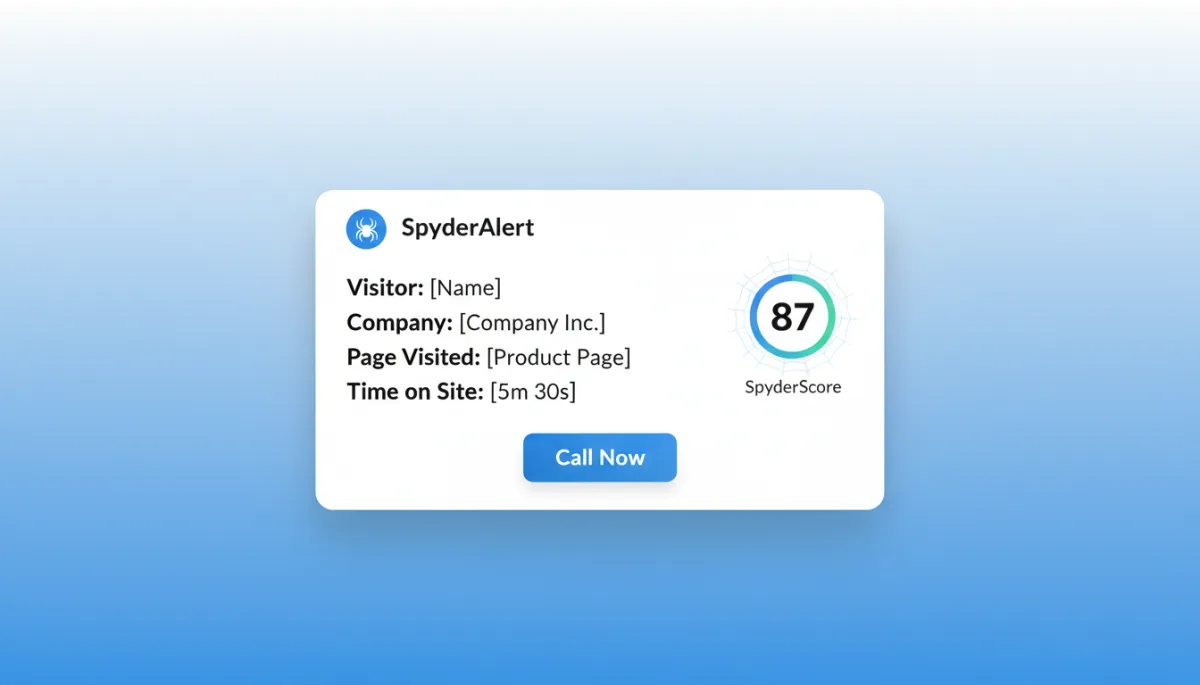
This is how you operationalize the MIT and HBR numbers. The research says “under 5 minutes” and “under 1 hour” are where the money is. SpyderAlert makes “under 5 minutes” the default, not the exception, for your hottest leads.
Identified Visitors: Your Quietest, Hottest Leads
Most teams only think about speed to lead when someone fills out “Contact Sales.” But some of your best opportunities never touch a form. They are deep in your pricing, case studies, or integration docs and then they leave.
LeadSpyder’s visitor identification flips that. We can often put a name, company, and contact info to those “anonymous” visitors. When one of them crosses a SpyderScore of 80+, SpyderAlert fires just like it would for a form fill, so your reps can reach out while they are still in research mode.
- Form-fill leads expect a call and will tolerate a slower response, but they still convert better when you are fast.
- Identified visitors do not know you can see them, and they are actively comparing vendors right now.
Reach out within a few minutes with a helpful, contextual message and it feels like service, not stalking. “Hey Alex, saw you were checking out our pricing and integrations. Want to walk through how this would look for your team?” Customers tell our users they are impressed by how fast someone followed up. Not creeped out. Impressed, because almost no one else does it.
If you want the technical breakdown of how we identify those visitors, you can read more here: https://leadspyder.ai/blog/how-to-identify-anonymous-website-visitors.
Building a Speed-to-Lead System That Actually Holds
You do not fix speed to lead with a Monday pep talk. You fix it with a system that makes the right behavior the easy behavior for your reps. Three pieces need to work together for inbound or outbound teams.
- Real-time notification. Your rep needs to know within seconds that a high-intent visitor just landed. SpyderAlert handles this automatically in the background.
- Frictionless contact data. The alert itself needs to include the name, email, phone, company, and session context, so the rep can act without hunting through another dashboard.
- A follow-up script that matches the context. If someone spent nine minutes on your pricing page, referencing that is helpful, not creepy, when a pro does it within a few minutes.
When those three are in place, your team naturally operates in the “under 5 minutes” zone the MIT study highlights. No heroics. No “try harder” speeches. Just a system that lines up with how buyers actually behave today.
Frequently Asked Questions
What is speed to lead?
Speed to lead is the time between a prospect showing interest and your first contact attempt. The shorter that window, the higher your odds of making contact, qualifying the lead, and turning it into revenue. The MIT, Harvard Business Review, and InsideSales.com data all point the same way: minutes beat hours, and hours beat days.
What do the speed-to-lead statistics actually show?
The MIT Lead Response Management Study found that contacting a lead within 5 minutes is 21x more effective than waiting 30 minutes. Harvard Business Review found that responding within 1 hour makes a sales-qualified conversation 7x more likely than waiting 24 hours. InsideSales.com found that the average company responds in 47 hours, which means most teams are operating at the worst possible point on the response curve.
Why does speed to lead fall off so fast after 5 minutes?
In the first few minutes after a visit, the prospect is actively comparing options and thinking about the problem you solve. They have other vendors in mind and other tabs open. After that, attention shifts, inboxes fill up, and competing contact attempts kick in. Your first-mover advantage erodes quickly, which is exactly what the MIT data shows as qualification odds drop.
How does SpyderAlert help with speed to lead?
SpyderAlert sends a real-time notification to your sales team the moment a HOT visitor (SpyderScore 80+) lands on your site or crosses a key intent threshold. The alert includes the visitor’s name, contact information, company when available, and behavioral data from their session. That means your reps can call or email within minutes, often while the visitor is still on your site, instead of waiting for a CRM sync or daily report.
Does speed to lead apply only to form fills?
No. It applies to both form fills and identified visitors who never submit a form. Form-fill leads know you are going to reach out, but they still respond better when you are fast. Identified visitors are in evaluation mode and have not committed to anyone yet. The first company to reach them with a professional, contextual message has a huge edge over every other tab they have open.
Your traffic already has names on it. You just cannot see them yet.
[Start Free 7-Day Hunt] → https://leadspyder.ai/start
No contract. 30-day money-back. Live in under 10 minutes.