Your Website Traffic Is Not Converting. Here's the Actual Reason.
Your Website Traffic Is Not Converting. Here's the Actual Reason.
You already paid for the leads. The problem is, you never see most of them.
When website traffic is not converting, the usual reaction is to blame design, copy, or your funnel. You rewrite headlines, tweak CTAs, and A/B test button colors. You might squeeze your conversion rate from 2.1% to 2.4%, but 95%+ of visitors still leave without a trace. That is not a design problem — it is an anonymity problem.
The real reason your traffic does not convert is simple: almost everyone who visits your site stays anonymous. Average B2B website conversion rates sit around 2–3%. That means 97–98 out of every 100 visitors leave without identifying themselves in any way. You already paid to get them there. You just never find out who they were.

The Numbers Behind “Traffic Not Converting”
If you run a B2B website with decent traffic, your numbers probably look like this. You get a few thousand visitors per month. A small slice fills out a form or books a demo. The rest leaves and never comes back. Here is what that actually means in hard metrics.
- Average B2B website conversion rate: about 2–3% of total traffic.
- That means 97–98 out of every 100 visitors leave without identifying themselves.
- Even strong conversion rate optimization might lift that by 0.5–1.5 percentage points.
- But that still leaves 95%+ of your visitors anonymous and unreachable.
- Visitor identification can realistically identify 20–40% of your total visitors as named contacts.
Imagine 1,000 visitors per month. A 2–3% conversion rate gives you 20–30 form fills. That is what you see in your CRM. The other 970–980 visitors are invisible. With visitor identification, 200–400 of those “lost” visitors turn into real people with names, emails, and phone numbers. Same traffic, radically different lead volume.
Why More Forms and Pop-Ups Don’t Fix the Problem
Most businesses respond to low conversion by adding friction, not solving the root issue. You add more CTAs, more pop-ups, and more “Book a demo” buttons. You shorten forms, test layouts, and obsess over microcopy. Those changes can help at the margin, but they only affect people already willing to fill out a form.
The hard truth: most visitors will never fill out a form, no matter how polished it is. They are researching, comparing, or just not ready to commit. Some get interrupted. Others want to think before scheduling a call. None of that changes because your button is now green instead of blue. Form optimization helps the 2–3% predisposed to convert. It does almost nothing for the 95%+ who refuse forms on principle.
So you keep paying for traffic, watching “sessions” and “bounce rates,” and telling yourself it’s a funnel issue. But what you really have is an identification issue. You do not know who is visiting, so you cannot follow up — even when they are the perfect fit.
The Real Fix: Visitor Identification
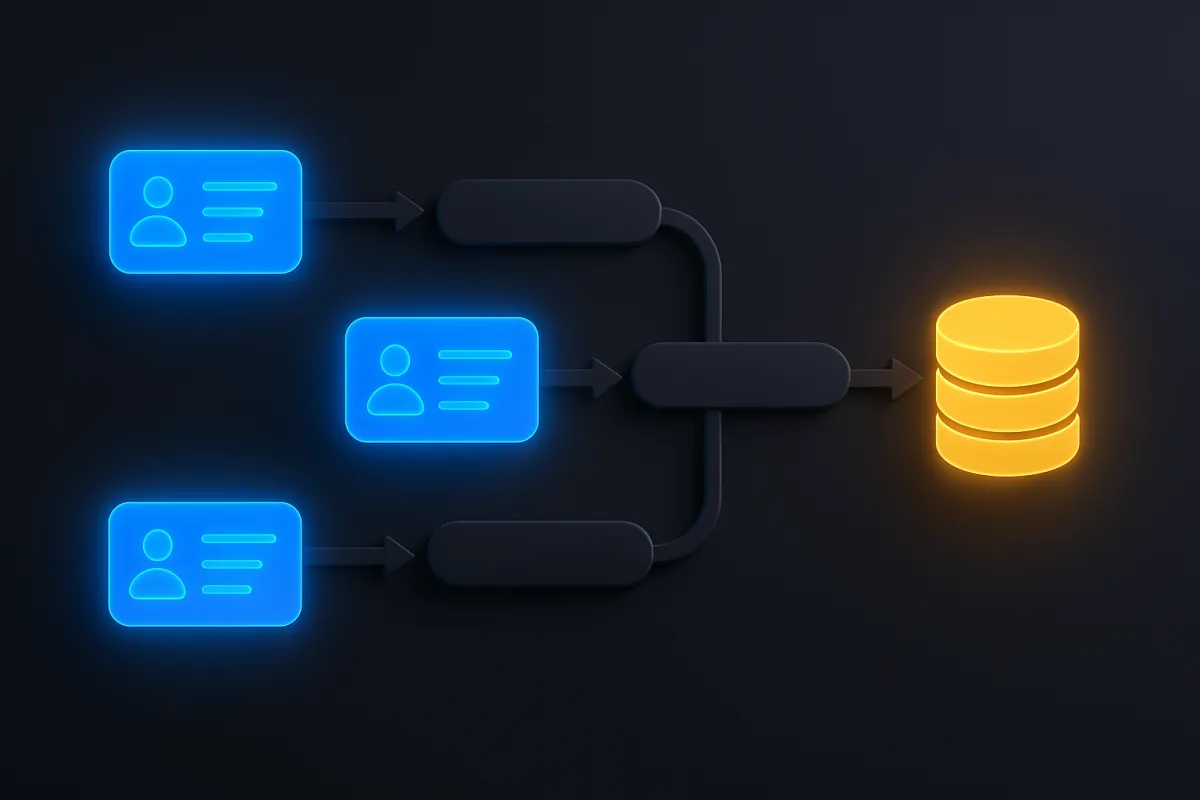
Visitor identification flips the problem on its head. Instead of begging more people to fill out forms, you identify who is visiting even when they do not convert. LeadSpyder connects your traffic to real people and companies. It turns anonymous sessions into named contacts your sales team can actually work.
LeadSpyder typically identifies 20–40% of your site visitors as real leads. That includes name, email, phone number, and the pages they viewed. You see who read your pricing page, who compared features, and who came back twice in the same week. You are no longer guessing which accounts are interested — you can see it in black and white.
Instead of optimizing a 2–3% slice of traffic, you suddenly have visibility into a meaningful portion of the 97–98% who used to disappear. This is not magic. It is simply using data you already paid for and connecting it to real people.

How This Changes Your Lead Math
Let’s run the numbers for a typical B2B site. Say you get 2,000 visitors per month and convert 2% through forms. That is 40 leads you can see. You might push that to 50 or 60 with solid CRO work. Helpful, but it does not change the business.
With visitor identification at a 20–40% match rate, those same 2,000 visitors now look very different. You still get your 40 form fills. On top of that, LeadSpyder can realistically identify 400–800 additional visitors as named contacts. You just went from 40 visible leads to 440–840 potential leads from the exact same traffic.
Not every identified visitor is ready to buy today. That is fine. You now know who they are, what they looked at, and how interested they seemed. Your sales and marketing teams can prioritize follow-up, build warm nurture sequences, and focus on the visitors who actually showed intent.
What “Traffic Not Converting” Really Means for You
When you say “our traffic is not converting,” you are usually describing two different groups. The first group is low-intent traffic — people browsing, learning, or casually researching. They are not ready to buy today. No form change will suddenly make them book a demo. They might be useful for top-of-funnel nurturing, but they are not sales-ready yet.
The second group is the one that matters most: high-intent visitors who leave without converting. These are people who check your pricing, read your case studies, and compare you against competitors. They might be interrupted, want internal approval, or simply not be ready to talk to sales yet. But they are interested. Without identification, they vanish the moment they close the tab.
LeadSpyder helps you separate these groups. You can see who showed real buying signals and who just skimmed a blog post. Instead of treating all non-converters as the same, you focus your outreach on the visitors who actually looked like buyers.
LeadSpyder in Your Existing Funnel
You do not have to choose between CRO and visitor identification. They work together. Keep optimizing your forms and landing pages — that improves the experience for the small percentage who are ready to convert right now. At the same time, use LeadSpyder to capture the high-intent visitors who will never fill out a form on their own.
In practice, your funnel looks like this. CRO keeps your 2–3% form conversion healthy and maybe nudges it up. LeadSpyder then adds another 20–40% of visitors as identified contacts. Your total reachable audience from the same traffic moves from a tiny slice to a meaningful share. You stop relying on form fills as the only way to know who is interested.
Instead of staring at “anonymous sessions” in analytics, your team works an actual list of people and companies. They can prioritize by pages viewed, time on site, and visit frequency. That is a completely different way to think about “traffic not converting.”
Frequently Asked Questions
Why is my website traffic not converting?
Most website traffic does not convert because forms only capture a small fraction of visitors. Typical B2B sites see about 2–3% of visitors fill out a form or book a call. The remaining 97–98% leave without identifying themselves, even when some of them are genuinely interested. Without visitor identification, those visitors are invisible and impossible to follow up with.
Does conversion rate optimization fix low-converting traffic?
CRO helps, but only for a small slice of your audience. It improves the experience for visitors already willing to fill out a form. You might see a realistic lift of 0.5–1.5 percentage points in conversion. That is useful, but it does not address the 95%+ of visitors who will never complete a form, no matter how well-designed it is.
How many leads am I missing without visitor identification?
At a 20–40% identification rate, a site with 2,000 monthly visitors and a 2% form fill rate is seeing 40 visible leads and missing 400–800 additional named contacts. On a site with 5,000 monthly visitors, that can mean 1,000–2,000 additional identified visitors each month. Not all of them are ready to buy, but you finally know who they are and how to reach them.
Can I run CRO and LeadSpyder at the same time?
Yes — and you should. CRO improves the form-fill experience for visitors predisposed to convert today. LeadSpyder works on the visitors who will not fill out a form at all. Together, they give you both cleaner form leads and a much larger pool of identified visitors from the same traffic.
You already paid for the leads. LeadSpyder just shows you who they are.
Start your free 7-day hunt → https://leadspyder.ai/start
No contract. 30-day money-back guarantee. Live in under 10 minutes.